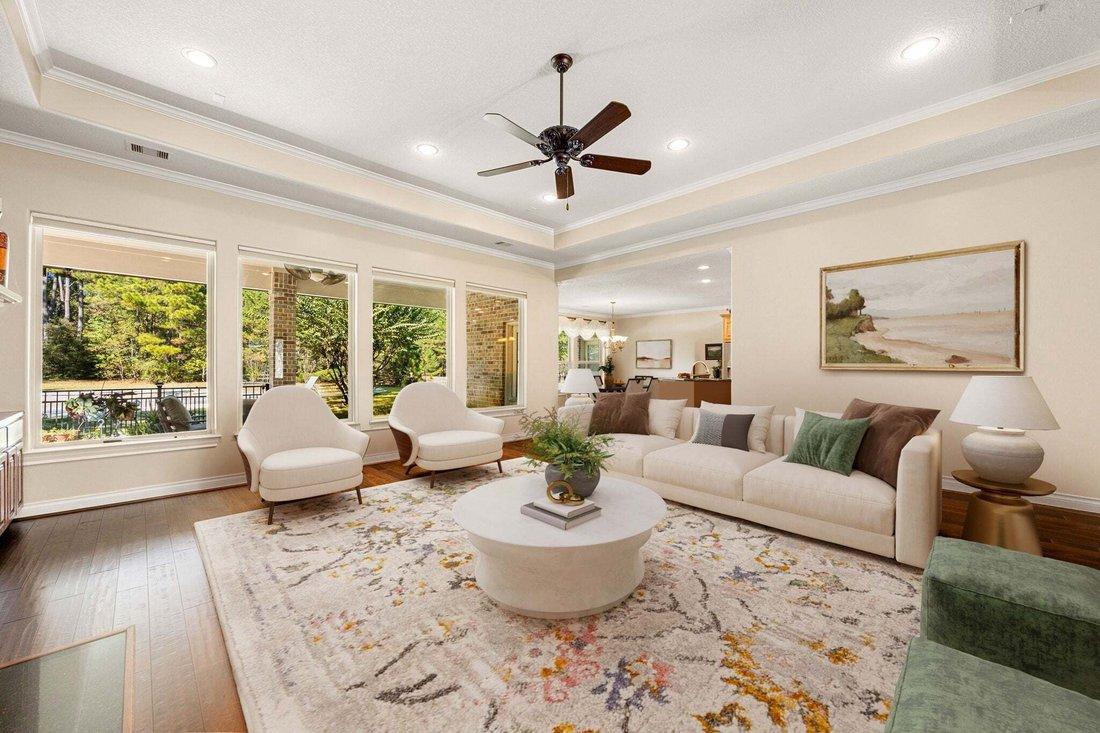
Empty House or Staged House? The Answer Isn’t Always What Sellers Expect.
Should You Leave Your Woodforest Home Empty—or Stage It Before Selling?
The movers are gone.
The closets are empty.
Garage cleared.
Pictures removed.
Furniture moved to the next house.
You stand in the middle of the living room and think:
“This actually looks huge.”
And maybe it does.
No sofa.
No dining table.
No beds.
Nothing blocking the windows.
Then the first buyers arrive.
They walk into the same room and say:
“Is this where the dining table goes?”
Another asks:
“Will our sectional fit?”
Someone walks into the upstairs room and cannot decide whether it is supposed to be:
Game room.
Media room.
Bedroom.
Office.
Suddenly, the empty house that looked enormous to you starts feeling difficult for buyers to understand.
That is the challenge of selling vacant.
An empty home can look:
Clean.
Simple.
Spacious.
But it can also feel:
Cold.
Smaller than expected.
Difficult to scale.
Harder to emotionally connect with.
The right strategy depends on the house.
Sometimes staging is worth every bit of the effort.
Sometimes partial staging is enough.
Sometimes virtual staging can help online.
And sometimes a home truly shows best empty.
The important thing is making that choice deliberately—not simply because the furniture already left.
Start With the Floor Plan
The first question is not:
“How expensive is staging?”
It is:
“Will buyers understand this house without furniture?”
Walk every major room.
Ask:
Is the purpose immediately obvious?
Living room?
Dining?
Office?
Game room?
Breakfast area?
If yes, vacancy may be less of an issue.
If several rooms require explanation, staging deserves more consideration.
Some Rooms Are Easy to Understand Empty
A kitchen is obviously a kitchen.
Bathroom?
Obvious.
Laundry room?
Usually obvious.
But an empty:
Formal living room.
Flex room.
Large loft.
Game room.
Breakfast area.
bonus room.
can create confusion.
Furniture gives a room context.
Scale Is Harder to Judge Without Furniture
You know the primary bedroom held:
King bed.
Two nightstands.
Dresser.
Chair.
The buyer sees an empty rectangle.
They may think:
“This looks small.”
Furniture can actually make some rooms appear larger because it gives buyers a familiar scale reference.
Empty Does Not Always Mean Spacious
This surprises sellers.
Furniture can show:
How much fits.
How much floor space remains.
Where traffic flows.
Without those reference points, dimensions can be difficult to interpret.
Large Rooms Can Be Especially Difficult
A very large family room may leave buyers wondering:
Where does the television go?
Where does the sofa go?
How do we use this much space?
Good staging divides the room into logical zones.
For example:
Main seating.
Reading area.
Conversation space.
Open Floor Plans Need Definition
A Woodforest home may have one large open area combining:
Kitchen.
Breakfast.
Family room.
Maybe informal dining.
When empty, everything can blend together.
A few well-placed pieces can show where one function ends and another begins.
Staging Should Explain the Floor Plan
That is the most important purpose.
Not decoration.
Not making the house look like a furniture showroom.
Staging should answer:
Where do we eat?
Where do we sit?
Where does the television go?
Can a king bed fit?
Can two people work from home?
How is this upstairs space used?
When staging answers those questions, it is doing real work.
Do Not Stage Every Square Foot
More furniture does not automatically mean better staging.
The goal is not:
Fill the house.
The goal is:
Explain the house.
Focus on the rooms that influence the buyer’s decision most.
The Living Room Is Usually a High Priority
It is often one of the biggest emotional spaces.
A vacant living room can feel:
Echoey.
Cold.
Impersonal.
A few pieces may transform it.
Potentially:
Sofa.
Two chairs.
Rug.
Coffee table.
Simple accessories.
Enough to communicate scale.
Keep Furniture Appropriate to the Room
A huge sectional can make a good room look cramped.
Tiny staging furniture can make the presentation feel artificial.
Choose proportions that represent how the room would realistically be used.
The Primary Bedroom Is Another High-Value Staging Room
Buyers frequently want to know:
Can we fit a king bed?
Nightstands?
Dresser?
Sitting area?
A well-scaled staged primary bedroom can answer those questions immediately.
A Bed Can Make a Bedroom Look Bigger
Counterintuitive.
But once the buyer sees a king or queen bed with remaining floor space, they understand the room.
Without it, they may underestimate the dimensions.
Secondary Bedrooms Do Not All Need Full Staging
You may only need:
One or two.
Especially if the other bedrooms are:
Similar size.
Straightforward layout.
Do not stage four nearly identical bedrooms just because they exist.
The Office Can Be Worth Staging
If the home has a dedicated study, make it unmistakable.
Desk.
Chair.
Simple shelving.
The buyer should walk in and immediately understand:
“This is a real workspace.”
Do Not Put a Tiny Desk in a Large Study
You want to show:
Scale.
Function.
A miniature desk in the corner can actually make the room look strange.
Use appropriately sized pieces.
Flex Rooms Need the Most Help
This is where staging often earns its keep.
A room could be:
Office.
Playroom.
Gym.
Guest room.
Media.
The seller thinks:
“That flexibility is great.”
Buyer thinks:
“What is this room?”
Choose one clear function.
One Room Should Have One Story
Do not stage:
Desk.
Exercise bike.
Sleeper sofa.
Children’s toys.
All in the same flex room.
That communicates:
We don't know what this space is either.
Pick the most logical use.
Game Rooms Benefit From Scale
A Woodforest home with a large upstairs game room may look impressive furnished.
Empty?
It can feel like a large hallway.
Use enough staging to show:
Sectional.
Television area.
Game table.
or another realistic arrangement.
Media Rooms Are Different
If the property has a dedicated media room with:
Projection setup.
Dark walls.
Built-in audio.
you may not need significant furniture.
But seating can help communicate capacity.
Dining Rooms Can Feel Surprisingly Small When Empty
Buyers may stand inside and wonder:
Will an eight-person table fit?
A table can answer that instantly.
If the dining room is a strong feature, staging may improve perception considerably.
Dining Furniture Should Not Be Oversized
You are trying to show:
Usability.
Not host a banquet.
Leave enough space around the table that buyers see comfortable circulation.
Breakfast Areas Can Disappear Visually
In an empty open-concept home, buyers may miss the fact that there is space for:
Breakfast table.
Kitchen dining.
A simple table can help define it.
Kitchen Islands Usually Need Less Decoration
Do not over-stage counters.
A clean kitchen with:
One bowl.
Simple plant.
Maybe a few stools.
is usually enough.
Let:
Cabinetry.
Counters.
Island size.
remain the focus.
Counter Stools Can Help Show Island Scale
If the island comfortably seats:
Three.
Four.
Five.
appropriate stools can communicate that quickly.
But do not cram in too many.
Vacant Homes Put Every Imperfection on Display
There is nowhere to hide.
With furniture gone, buyers see:
Wall scuffs.
Floor scratches.
Outlet covers.
Baseboards.
Paint differences.
Nail holes.
Carpet stains.
Sun fading.
Furniture may have hidden these for years.
Now they become part of the showing.
Walk the House After the Movers Leave
Not before.
After.
Because moving reveals:
Dings.
Damage.
Dirty wall areas.
Scratched flooring.
Dust behind furniture.
This is when the real pre-listing punch list begins.
Patch Nail Holes Carefully
Do not leave:
Hundreds of holes.
Poorly matched paint dots.
Uneven patches.
A vacant wall turns every repair into a focal point.
Touch-Up Paint Can Be More Noticeable Than the Original Mark
Especially if:
Paint has faded.
Wrong sheen is used.
Old paint changed color.
Test touch-ups.
Sometimes repainting the wall provides a cleaner result than spot correction.
Baseboards Matter More in an Empty Home
Furniture used to cover:
Scuffs.
Dust.
Damage.
Now every wall edge is exposed.
Clean them thoroughly.
Flooring Becomes the Visual Center of Empty Rooms
With no furniture, buyers stare directly at:
Carpet.
Wood.
Tile.
Luxury vinyl.
If flooring is worn, vacancy can magnify it.
Carpet Should Be Professionally Cleaned When Needed
Furniture indentations.
Traffic patterns.
Stains.
can become more visible after move-out.
Cleaning may significantly improve presentation.
Some Furniture Indentations Improve With Time
But do not assume.
If the carpet remains heavily compressed or damaged, buyers may notice.
Evaluate after cleaning.
Hardwood Scratches May Be More Visible
Especially with:
Bright window light.
Empty rooms.
You do not necessarily need full refinishing.
But understand whether the floors support the price point.
The Echo Changes Buyer Perception
An empty home can sound:
Hollow.
Loud.
Every footstep echoes.
This can make even a beautiful property feel less comfortable.
Rugs and furnishings absorb sound and can create warmth.
Staging Changes More Than Appearance
It changes:
Sound.
Scale.
Movement.
Emotional temperature.
That can matter particularly in larger homes.
Vacant Homes Can Feel Colder—Literally and Emotionally
Do not turn off the HVAC because nobody lives there.
A showing in:
Hot.
Humid.
Cold.
uncomfortable conditions
can quickly hurt buyer perception.
Keep the home reasonably comfortable.
Texas Summer Is Not the Time to Shut Down the AC
Beyond buyer comfort, maintaining appropriate interior conditions can also help protect:
Materials.
Cabinetry.
Interior finishes.
The exact temperature is your decision, but the property should not feel abandoned.
Do Not Set the Temperature to an Extreme to Save a Few Dollars
Buyer walks in.
House is 85 degrees.
They leave quickly.
Saving on utilities can cost you:
Showing quality.
Perception.
Potentially the sale.
Keep Electricity On
The home needs:
Lighting.
HVAC.
Appliances for inspection.
Garage doors.
Security.
Other systems.
Do not disconnect utilities while actively marketing unless there is an unusual reason coordinated with your professionals.
Water Usually Needs to Remain Available Too
Inspections and buyer due diligence may involve:
Faucets.
Toilets.
Water heaters.
Other plumbing.
Coordinate utility timing carefully.
A Vacant Home Still Needs Cleaning
This is another misconception.
“Nobody lives there. How can it get dirty?”
Dust.
Dead insects.
Leaves.
Spiderwebs.
Construction dust.
Showing traffic.
They accumulate.
Create a Weekly Property Check
Someone should regularly inspect:
Interior.
Exterior.
Pool.
HVAC.
Plumbing.
Security.
Landscape.
Mail or deliveries.
The home still needs ownership attention.
Toilets Can Develop Rings
Unused bathrooms still need attention.
Flush and clean regularly.
A vacant bathroom with a visible toilet ring makes the property feel neglected.
Run Faucets Periodically
Unused plumbing fixtures can develop:
Odors.
Dry traps.
Stagnant water.
Your appropriate property-maintenance professional can advise on the home's needs.
The important point is:
Vacant does not mean ignore the plumbing.
Check Under Sinks
A slow leak that might be noticed immediately in an occupied home can continue much longer in a vacant property.
Regular checks matter.
Smart Leak Sensors Can Be Helpful
If already installed, monitoring can provide additional awareness.
But technology does not replace in-person property checks.
The Refrigerator Needs a Decision
If it stays:
Keep it clean.
Powered appropriately.
No old food.
No odors.
If it is excluded or being removed:
Coordinate timing so the kitchen is presented cleanly.
Never Leave an Empty Refrigerator Closed and Unpowered Without Proper Preparation
Odors can develop quickly.
If an appliance is being disconnected, follow manufacturer or appropriate maintenance guidance.
The Dishwasher Should Not Smell
Run or maintain it appropriately.
Buyers open appliances.
A beautiful vacant kitchen can be undermined instantly by odor.
Vacant Houses Reveal Smells More Easily
No cooking.
No candles.
No daily airflow from people moving through.
Buyers may immediately notice:
Pet odor.
Mustiness.
Drain odor.
Smoke.
Strong cleaners.
Investigate the source rather than masking it.
Do Not Overuse Air Fresheners
An empty house filled with strong fragrance can make buyers wonder:
“What are they covering up?”
Clean is better than perfumed.
Natural Air Matters
Where practical before showings:
Freshen the home.
Maintain HVAC.
Address odors.
But do not leave windows unsecured.
Staging Can Add Emotional Warmth
This is the part sellers sometimes dismiss because it cannot be measured with a tape measure.
Buyer walks into:
Empty beige room.
They evaluate architecture.
Buyer walks into:
Simple, well-staged room.
They may start imagining living there.
That emotional transition matters in residential real estate.
But Bad Staging Can Hurt
Furniture that is:
Cheap-looking.
Too small.
Outdated.
Overly trendy.
Poorly arranged.
can make a nice home feel worse.
If you stage, do it deliberately.
Luxury or Higher-Priced Homes Often Need Staging Appropriate to the Price Point
A beautiful Woodforest property marketed at a premium price should not feel furnished with:
Random leftovers.
Mismatched furniture.
Temporary plastic pieces.
If staging quality does not support the home's positioning, partial professional staging may be better.
Your Old Furniture Is Not Automatically Staging
Seller moves out.
Leaves:
Old sofa.
Two chairs.
Dining table.
Mattress.
That may make the house feel more abandoned—not more inviting.
Staging requires:
Selection.
Placement.
Proportion.
Consistency.
Partial Staging Can Be a Strong Middle Ground
You may stage only:
Entry.
Living room.
Kitchen stools.
Dining room.
Primary bedroom.
Office.
Maybe patio.
This can give buyers enough visual context without furnishing the entire home.
Prioritize the Rooms That Sell the Lifestyle
For many Woodforest homes, these may include:
Main living.
Kitchen/dining relationship.
Primary suite.
Study.
Game room.
Outdoor living.
You do not need furniture in:
Every bedroom.
Utility room.
Hallway.
Outdoor Staging Can Matter Too
If you have:
Covered patio.
Pool.
Outdoor kitchen.
Leaving it completely empty can make the backyard feel unfinished.
A few appropriate pieces can show:
Dining.
Lounging.
Entertainment.
Do Not Overfill a Patio
Buyers still need to understand:
Walking space.
Pool access.
Yard.
Keep outdoor furniture proportional.
Pool Homes Should Remain Immaculate
Vacant seller moves away.
Pool maintenance slips.
Now:
Leaves.
Cloudy water.
Dirty decking.
A pool that previously helped sell the house becomes a liability.
Keep professional service running.
Landscaping Needs Consistent Care
A vacant home with:
Overgrown lawn.
Dead plants.
Leaves.
looks abandoned quickly.
Continue:
Mowing.
Edging.
Irrigation.
Landscape maintenance.
until possession transfers.
Curb Appeal Matters Even More When Nobody Lives There
Buyers subconsciously look for signs of neglect.
Overflowing mailbox.
Packages.
Newspapers.
Weeds.
Trash bins sitting out.
These can communicate:
Vacant.
Unmonitored.
Neglected.
Keep exterior appearance active and cared for.
Do Not Advertise Vacancy Publicly More Than Necessary
There may be legitimate security reasons to avoid broadcasting:
“Nobody lives here!”
in public-facing marketing.
Your real estate professional can manage showing information and access appropriately.
Security Deserves More Attention
Vacant properties may benefit from:
Regular checks.
Working locks.
Exterior lighting.
Alarm.
Cameras where appropriately used.
Smart locks.
Again, avoid safety guarantees.
The goal is responsible property management.
Change Access After Contractors Finish
Painters.
Movers.
Cleaners.
Stagers.
Photographers.
Many people may have had temporary access.
Once preparation is complete, update:
Lockbox procedures.
Codes.
Access.
as appropriate.
Do Not Leave Spare Keys in Obvious Places
Under mat.
Planter.
Fake rock.
Avoid it.
Use proper real estate access procedures.
Smart Locks Should Be Managed Carefully
If contractors had codes, remove them.
Keep:
Seller code.
Authorized showing process.
separate.
Insurance Can Be Different for Vacant Properties
This is something sellers should address directly with their insurance professional.
Occupancy status can matter to insurance coverage and underwriting.
Do not simply assume your existing coverage remains unchanged after moving out.
Tell Your Insurance Professional the Truth About Occupancy
Do not hide vacancy because you are worried about the premium.
You need to understand:
Coverage.
Requirements.
Any changes.
Specific answers belong with the insurer.
Do Not Assume “Listed for Sale” Automatically Solves Insurance Questions
Policy terms vary.
Get property-specific guidance.
Mail Should Be Redirected
A pile of mail communicates:
Nobody is checking the property.
Set up appropriate forwarding and regular collection.
Packages Can Still Arrive
Old subscriptions.
Automatic orders.
Mistaken deliveries.
Have someone monitor the property.
Trash Service May Still Be Useful
Cleaning.
Staging.
Maintenance.
can generate waste.
But coordinate bins so they do not sit curbside indefinitely.
Pest Control Should Continue
A vacant home can still have:
Insects.
Rodents.
Other pests.
If you had regular service, consider maintaining it through the listing period.
Exterior Pest Signs Look Worse in Vacant Homes
Spiderwebs around:
Doors.
Lights.
Patio.
can build quickly.
Include exterior cleaning in regular maintenance.
Staging Does Not Fix Bad Pricing
This is critical.
You can spend thousands staging.
If the property is significantly overpriced, furniture will not solve the problem.
Staging helps:
Presentation.
Understanding.
Emotional connection.
It does not replace pricing strategy.
Staging Does Not Fix Deferred Maintenance Either
Beautiful sofa.
Leaking faucet.
Pretty dining table.
Old roof concern.
No.
Fix the fundamental issues first.
Decide the Staging Budget After Understanding the Price Position
Ask:
What is the home worth?
What is the likely buyer?
What does competition look like?
Then determine whether staging investment makes sense.
Look at Competing Listings Online
Are comparable Woodforest homes:
Occupied and beautifully presented?
Professionally staged?
Vacant?
New construction models?
Your home is competing visually before buyers ever schedule a showing.
New-Construction Models Can Raise Presentation Expectations
A buyer may tour:
Builder model.
Then your vacant resale.
The model feels:
Warm.
Finished.
Designed.
Your property feels:
Empty.
That does not make the builder home better.
But presentation can affect emotion.
Your Resale Has Other Advantages
Maybe:
Pool already installed.
Premium lot.
Mature landscaping.
Better location.
Upgrades.
More complete outdoor living.
Staging can help the interior presentation match those strengths.
Professional Staging Can Help Buyers See an Established Home as Current
Especially if:
Floor plan is traditional.
Rooms are large.
Architecture needs context.
The right furnishings can bridge:
Established construction.
Modern lifestyle.
But Do Not Stage to Pretend the House Is Something It Isn’t
A small bedroom is still small.
An awkward room is still awkward.
Staging should explain—not deceive.
Furniture Should Not Hide Defects
Do not place:
Rug over damaged floor.
Sofa in front of wall damage.
Console over moisture stain.
Known condition issues need appropriate attention.
Virtual Staging Can Help Online Marketing
For a completely vacant property, virtual staging can help buyers visualize:
Furniture placement.
Room scale.
Potential use.
It may be particularly useful for:
Bedrooms.
Living room.
Flex spaces.
Virtual Staging Should Be Clearly Disclosed
Buyers should understand when furnishings are digitally added.
And the image should not change:
Walls.
Windows.
Flooring.
Views.
Permanent architecture.
The purpose is furniture visualization.
Not property alteration.
Do Not Virtually Renovate the Home Unless Clearly Presented as a Concept
Changing:
Cabinet color.
Countertops.
Flooring.
Fixtures.
can misrepresent current condition if presented as though it exists.
Keep staging focused on furnishings unless concept imagery is handled appropriately and transparently.
Virtual Staging Does Not Solve the In-Person Experience
Buyer loves staged online photo.
Arrives.
Empty room.
There can be an emotional drop.
That does not mean virtual staging is bad.
Just understand its limitation.
Consider Including Both Staged and Vacant Views
If appropriate:
Virtually staged image.
Then actual room.
This helps buyers visualize furniture while still understanding reality.
Do Not Flood the Gallery With Duplicate Virtual Images
One or two strategic versions per important room are enough.
The buyer does not need:
Modern style.
Traditional style.
Farmhouse style.
for the same room.
Physical Partial Staging Often Provides Better Showing Continuity
Buyer sees online:
Sofa.
Dining.
Bed.
Arrives:
Same.
That consistency can strengthen the experience.
Staging Cost Should Be Evaluated Against Carrying Cost
Suppose staging costs:
Several thousand dollars.
If stronger presentation potentially helps you avoid:
Extended market time.
Repeated reductions.
Additional mortgage payments.
the expense may be easier to justify.
But no outcome is guaranteed.
Know Your Monthly Carrying Cost
For a vacant Woodforest home, you may still pay:
Mortgage.
Taxes.
Insurance.
HOA.
Utilities.
Pool.
Landscape.
Cleaning.
Security.
Every additional month has a cost.
This Is Why “We’ll Just Wait” Is Not Free
Seller rejects market feedback.
Waits.
Another month passes.
The home continues to cost money.
When evaluating:
Staging.
Price adjustment.
Repairs.
calculate the carrying cost of delay.
Vacant Homes Can Create Buyer Negotiating Assumptions
Buyer sees empty home.
May think:
Seller already moved.
Seller needs to sell.
Maybe we can negotiate harder.
That does not mean you should hide vacancy.
It means your pricing and negotiation strategy should not appear desperate.
Do Not Let Vacancy Become Neglect
A well-maintained vacant home communicates:
Seller moved.
Home ready.
A neglected vacant home communicates:
Seller gone.
Problem waiting.
Huge difference.
Keep the Home Looking Actively Managed
Temperature comfortable.
Lights appropriate.
Lawn maintained.
Pool clean.
Bathrooms clean.
No odors.
No mail pile.
No dead insects.
No maintenance surprises.
Showing Instructions Should Be Simple
Vacant properties can be convenient to show.
Use that advantage.
Avoid unnecessary:
Long notice.
Narrow time windows.
Complicated approvals.
The easier the property is to tour, the more opportunity you create.
Easy Showing Access Can Be a Major Vacant-Home Advantage
Occupied sellers deal with:
Work.
Pets.
Children.
Cleaning.
Vacant home can often accommodate:
Same-day showings.
Longer buyer visits.
Second showings.
Use that flexibility.
But Access Should Still Be Controlled
Vacant does not mean:
Open door.
Use secure professional showing procedures.
Leave Important Interior Lights On When Appropriate
Depending on your showing system and property-management strategy, strategic lighting may help.
Especially:
Entry.
Interior rooms with limited natural light.
But unnecessary constant lighting may not be required.
Coordinate efficiently.
Window Coverings Need a Plan
If blinds remain:
Open them appropriately.
If curtains were removed:
Check privacy.
Sun exposure.
Interior appearance.
An empty house with every window completely bare can sometimes feel unfinished.
Quality Window Treatments Can Stay as a Feature
If they convey.
They can add:
Warmth.
Privacy.
Finished feel.
Do not remove custom shades automatically if they belong with the property and strengthen presentation.
Removing Curtains Can Reveal Wall Damage
Curtain rods leave:
Holes.
Paint differences.
Be prepared to finish the wall properly.
Do Not Leave Random Rods With No Curtains
It looks unfinished.
Either:
Present the treatment properly.
Or remove and repair appropriately.
Closets Look Great Empty—If They’re Clean
This is one advantage of vacancy.
Buyers can see:
Depth.
Shelving.
Storage.
Take advantage.
Clean:
Shelves.
Floors.
Corners.
Do Not Use Closets for Leftover Moving Debris
Vacant house.
One closet filled to ceiling with:
Paint cans.
Cleaning supplies.
Boxes.
Now buyers wonder what is being hidden.
Keep storage clean.
Leave Useful Home Materials Neatly Organized
You may want to leave:
Extra tile.
Flooring.
Paint.
Filters.
Manuals.
Keep them:
Labeled.
Neat.
In one appropriate location.
Do not scatter materials throughout garage and closets.
Garage Should Be a Vacant Home Strength
Once your belongings are gone, buyers can finally see:
Parking capacity.
Depth.
Storage.
Floor space.
Do not refill it with staging crates and moving leftovers.
If Staging Furniture Is Delivered, Manage the Logistics
Stagers may need:
Truck access.
Furniture movement.
Installation.
Removal before closing.
Coordinate so:
Walls.
Floors.
Doors.
are protected.
The Staging Contract Needs to Match Your Sale Timeline
Understand:
Initial rental period.
Monthly extension costs.
Removal process.
What happens if you close quickly.
What happens if listing takes longer.
This helps you budget.
Do Not Cancel Staging the Moment You Go Under Contract Without Thinking
The buyer may still:
Inspect.
Appraise.
Return for measurements.
Transaction may not yet be certain.
Discuss timing with your real estate professional.
Appraisal Does Not Require a Fully Staged House to Determine Value
Do not keep expensive furniture solely because you believe:
“The appraisal will be higher if the sofa stays.”
Staging affects presentation, but valuation considers the property itself and relevant market evidence.
Staging May Help the Property Present at Its Best
That can still be useful.
But avoid assigning a guaranteed appraisal premium to furnishings.
Vacant Home Photography Can Work Beautifully in Some Properties
Homes with:
Strong architecture.
Large windows.
Clear floor plan.
Exceptional views.
Beautiful finishes.
may photograph well without furniture.
Staging is not mandatory.
Minimalist Architecture May Actually Benefit From Less Furniture
If the design itself is the feature, over-staging can interfere.
Evaluate the specific property.
Strong Outdoor Views Can Carry Empty Rooms
A living room with:
Massive windows.
Pool view.
Golf course.
Greenbelt.
may already have an emotional focal point.
Furniture may only need to frame it lightly.
Unique Rooms Usually Benefit More From Staging
A strange-shaped:
Loft.
Flex room.
Formal area.
needs context more than a rectangular bedroom.
Prioritize money where buyers are most likely to become confused.
Use the “Can Buyers Tell What This Room Is?” Test
Walk into each empty room.
If answer is immediately:
Yes.
Maybe no staging needed.
If:
“Well, technically we used it as…”
consider staging.
Use the “Can Buyers Judge Scale?” Test
Would a buyer know:
King bed fits?
Eight-person table fits?
Sectional fits?
If not, furniture or accurate floor-plan information may help.
Use the “Does Empty Make This Look Better?” Test
Some rooms genuinely look better vacant.
Great flooring.
Beautiful windows.
Strong architecture.
Do not stage simply because you think you are supposed to.
Use the “Does Empty Make This Look Worse?” Test
Maybe:
Room echoes.
Looks small.
Odd layout exposed.
No focal point.
That is where staging can help.
Use the “What Are We Competing Against?” Test
Look online at five properties a buyer will compare with yours.
Does your empty home feel:
Cleaner?
More spacious?
Or:
Less finished?
Less emotional?
The answer should influence your presentation plan.
Use the “Cost of One Extra Month” Test
Add:
Mortgage.
Insurance.
HOA.
Utilities.
Pool.
Lawn.
What does one additional month cost?
Now compare that with:
Staging.
Painting.
Photography.
Price strategy.
This puts preparation expenses into context.
Use the “First 10 Photos” Test
Does the gallery feel:
Warm.
Understandable.
Interesting?
Or:
White room.
White room.
White room.
Empty rooms can become repetitive online.
Staging selected spaces can improve visual variety.
Use the “Would We Want to Visit?” Test
Forget that it is your home.
Look at the listing among:
Twenty Woodforest properties.
Would you schedule a showing?
If the vacant images feel forgettable, presentation needs improvement.
Use the “What Is the Hero?” Test
Every strong listing should have something buyers remember.
Pool.
Kitchen.
Greenbelt.
Living room.
Primary suite.
If the home is vacant, make sure the strongest feature still creates emotional impact.
Create a Woodforest Vacant-Home Seller Scorecard
Before deciding whether to stage, evaluate:
Floor Plan
Easy to understand empty?
Main Living Room
Does it need furniture for scale?
Primary Bedroom
Can buyers visualize a king bed?
Dining
Is size obvious?
Study
Does the function need explanation?
Flex/Game Room
Would staging clarify purpose?
Outdoor Living
Does patio need furniture?
Flooring
Does vacancy expose condition problems?
Paint
Any moving damage or patching?
Lighting
Does the home feel bright?
Temperature
Will it remain comfortable?
Cleaning
Who checks it weekly?
Pool
Professional maintenance continuing?
Landscaping
Regular service scheduled?
Plumbing
Who monitors for leaks and odors?
Security
Access and monitoring strategy in place?
Insurance
Vacancy discussed with your insurer?
Photography
Would physical or virtual staging improve the gallery?
Competition
How are competing homes presented?
Carrying Cost
What does every additional month cost?
Staging Cost
Does the investment make sense relative to the property and likely buyer?
Now you can decide based on the house—not simply because the movers already left.
Final Thoughts
Moving out before your Woodforest home sells can create a major advantage.
No daily cleaning.
No pets to move for showings.
No schedule conflicts.
No crowded closets.
Buyers can tour easily.
But vacancy does not automatically make a property show better.
Without furniture, buyers may struggle to understand:
Scale.
Room purpose.
Furniture placement.
How the home actually feels to live in.
That is why the decision should not be:
“Do staged homes always sell better?”
The better question is:
“What does this particular home need for buyers to understand and emotionally connect with it?”
Maybe the answer is:
Full professional staging.
Maybe:
Living room, dining, primary bedroom, and office only.
Maybe:
Strategic virtual staging.
Maybe:
Nothing at all.
Whatever you choose, remember that an empty property still needs active care.
Keep utilities on as appropriate.
Maintain the temperature.
Clean regularly.
Monitor plumbing.
Maintain the pool and landscaping.
Manage security.
Check the property frequently.
And calculate what every additional month of ownership actually costs.
Because a vacant Woodforest home should communicate:
“Move-in ready.”
Not:
“The seller already left and forgot about the house.”
When the property remains polished, secure, understandable, and appropriately staged for its layout and price point, vacancy can become an advantage instead of an obstacle.
Frequently Asked Questions
Should I stage my vacant Woodforest home?
It depends on the floor plan, price range, competition, room scale, and whether buyers can easily understand the property empty. Some homes benefit significantly from staging while others present well vacant.
Do I need to stage every room?
No. Partial staging of the main living room, dining area, primary bedroom, study, or important flex spaces may provide enough context without furnishing the entire property.
Can virtual staging replace physical staging?
Virtual staging can improve online visualization, but buyers will still encounter the actual empty property in person. It works best when used transparently and without altering permanent features.
Does an empty room look larger?
Not always. Furniture provides familiar scale, and some buyers may actually perceive an empty room as smaller because they cannot judge how much furniture will fit.
Should I leave some of my old furniture behind?
Only if it genuinely improves presentation. Random, worn, mismatched, or poorly scaled furniture may hurt the listing more than an empty room.
Do I need to keep utilities on after moving out?
The property generally needs to remain functional and comfortable for showings, inspections, appraisal, and maintenance. Coordinate specific utility decisions with your real estate and property professionals.
Should I tell my insurance company that the home is vacant?
Yes, discuss occupancy changes directly with your insurer so you understand the property's coverage requirements. Do not assume existing policy terms remain unchanged.
How often should someone check a vacant home?
The appropriate frequency depends on the property and circumstances, but regular in-person monitoring is important for plumbing, HVAC, security, pool, landscaping, cleanliness, and other maintenance.
Is professional staging worth the cost?
It can be when staging materially improves buyer understanding and presentation, but there is no guaranteed return. Compare the staging expense with the property's price point, competition, and monthly carrying cost.
What's the biggest takeaway?
When selling a vacant Woodforest home, do not leave it empty simply because you already moved. Decide whether staging helps buyers understand the scale and function, then keep the vacant property actively maintained so it feels polished and move-in ready rather than abandoned.