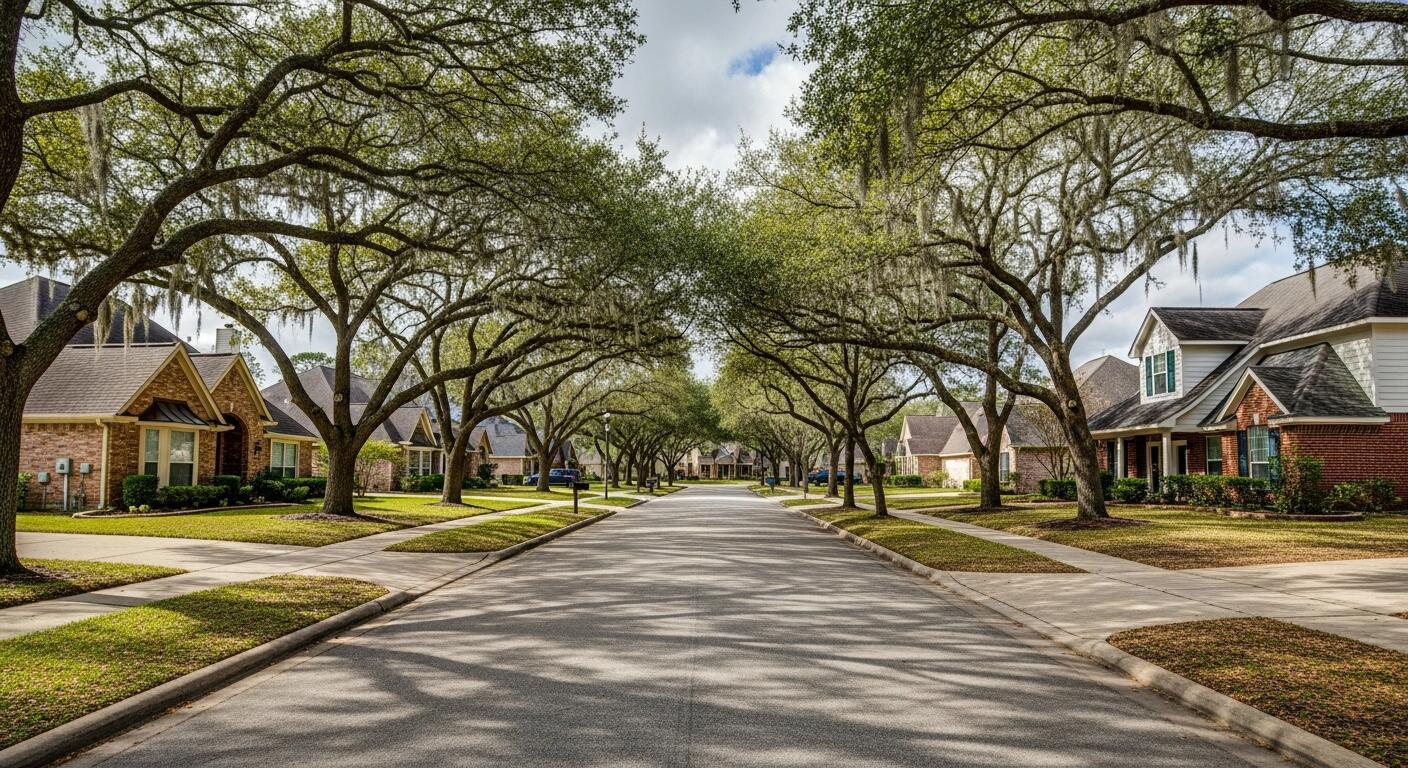
Love the House at Noon? Try the Drive at 7:30 A.M.
It's 1:15 on a Saturday afternoon.
You pull into the neighborhood.
Easy.
Quiet.
Hardly any traffic.
You tour the house.
Love it.
Twenty minutes later, you're sitting at the kitchen island saying:
“This location actually seems really convenient.”
Maybe it is.
But Saturday at 1:15 isn't Tuesday at 7:30 a.m.
And one of the most important parts of buying a home in Spring may happen before you ever walk through the front door:
Drive the routes you'll actually use.
Buyers Test the House but Guess About the Location
Think about how much effort goes into evaluating a house.
You inspect the bedrooms.
Open closets.
Measure walls.
Check the backyard.
Study the kitchen.
Walk through the garage.
Then someone asks:
“How's the commute?”
And the answer is:
“Google says 32 minutes.”
That's not much investigation for something you may do hundreds of times every year.
A Commute Isn't Just Mileage
Two homes can be the same number of miles from work and produce very different mornings.
Why?
Because distance doesn't tell you:
How quickly you reach a major road.
Where congestion tends to build.
How many traffic signals you encounter.
Whether your route involves tolls.
How predictable travel time is.
How alternative routes work.
A twelve-mile commute isn't automatically easier than an eighteen-mile one.
Drive It at the Time You'll Actually Drive It
This is the simplest advice in the article.
If you expect to leave home at 7:15 a.m., test the route around 7:15 a.m.
If you usually return at 5:30 p.m., test that too.
Don't rely entirely on:
Weekend traffic.
Midday showings.
A seller's commute.
An agent's commute.
Someone else's idea of “not bad.”
Your tolerance is what matters.
Test Both Directions
Morning traffic is only half the story.
The trip home may feel completely different.
You might tolerate a longer morning drive but hate an unpredictable evening one.
Or vice versa.
Test both whenever practical.
Because you're not buying one commute.
You're buying the round trip.
Pay Attention Before You Reach the Freeway
Buyers often focus on the major highway.
But sometimes the most frustrating part of the commute happens before you get there.
Neighborhood exits.
Traffic signals.
School zones.
Busy intersections.
Construction.
Turning patterns.
The first few miles can determine how the entire trip feels.
The Grand Parkway Can Change the Geography
Texas State Highway 99—commonly called the Grand Parkway—has changed how many parts of the Houston region connect.
For some Spring buyers, access to SH 99 may be an important part of their daily or occasional travel.
But don't assume proximity on a map automatically means a perfect commute.
Test the actual route from the specific house.
I-45 Access Can Matter Too
Interstate 45 is another major transportation corridor relevant to many Spring-area commuters.
Again, the key isn't simply:
“We're close to I-45.”
Ask:
How do we get there?
How long does that portion take at our normal departure time?
What happens when the primary route is congested?
Specific experience beats a vague location claim.
Don't Forget the Hardy Toll Road
Depending on where you're starting and where you're going, Hardy Toll Road may be another route buyers consider.
But toll roads introduce another question:
What does convenience cost?
A route that saves time may create recurring toll expenses.
If you expect to use toll roads frequently, include that in your household transportation budget.
“30 Minutes Away” Isn't a Permanent Fact
Traffic changes.
Construction happens.
Work schedules shift.
Weather affects travel.
An accident can transform a normal commute.
That's why buyers should avoid treating a single travel-time estimate as guaranteed.
Instead, think in ranges.
What's a good day?
What's normal?
What happens on a difficult day?
That gives you a more realistic picture.
The Commute Isn't Only About Work
This is where buyers can miss the bigger issue.
Where else do you go repeatedly?
Gym.
Grocery store.
Childcare.
School-related destinations.
Family.
Church or other regular activities.
Medical appointments.
Restaurants.
Hobbies.
Airport.
A house can have an acceptable work commute while putting everything else you do on the wrong side of town.
Map Your Real Week
Before choosing between two homes, write down the places you visit most often.
Not hypothetical places.
Your actual routine.
Then compare how each home changes those trips.
You may discover Home A saves ten minutes on your work commute but adds fifteen minutes to almost everything else.
Home B may create a more balanced week.
That's useful information.
Couples Should Test Both Commutes
This sounds obvious.
But buyers sometimes prioritize the commute of the person who works farther away.
That may make sense.
Or it may create a miserable daily routine for the other person.
Compare both.
If one person works from home several days per week, factor that in too.
You're optimizing a household, not one route.
Hybrid Work Can Trick You
“I only go into the office twice a week.”
Fair.
So a longer commute may be completely acceptable.
But think ahead.
Could your schedule change?
Could your employer require more office time?
Could you change jobs?
You can't predict everything.
But recognize when your home choice depends heavily on a work arrangement that may not be permanent.
Relocating Buyers Should Be Especially Careful
If you're moving to Spring from another city, Houston-area distances can be deceptive.
Something that looks close on a map may take longer than expected depending on:
Time.
Route.
Traffic.
Weather.
Construction.
Tolls.
Don't assume mileage translates into the same travel experience you're accustomed to elsewhere.
Drive it.
Don't Let a Beautiful House Negotiate With You
This happens.
Before the showing:
“Forty-five minutes is our absolute maximum.”
After seeing the dream kitchen:
“Forty-five isn't that bad.”
After seeing the backyard:
“Maybe fifty.”
After seeing the primary bathroom:
“We could probably do an hour.”
Be careful.
The kitchen won't be sitting beside you in traffic six months from now.
Decide Your Commute Limit Before Touring
This can help.
Before falling in love with properties, determine:
Ideal commute.
Acceptable commute.
Absolute maximum.
Then use those boundaries consistently.
You can always adjust after learning more.
But having a standard before emotion enters the decision can prevent major compromises you later regret.
Run the “Bad Tuesday” Test
Don't evaluate only the perfect commute.
Imagine:
It's Tuesday.
You slept badly.
It's raining.
Work was stressful.
Traffic is heavier than normal.
You still have to stop at the grocery store.
How do you feel about the drive home?
That's a better test than:
“Could we technically do this?”
A Longer Commute May Still Be Worth It
This article isn't saying:
Buy the closest house.
Maybe a longer drive gets you:
The home you really want.
More space.
A larger lot.
A different neighborhood environment.
Better access to other priorities.
That's a legitimate trade-off.
The important thing is making the trade intentionally.
Calculate the Time Over a Year
Suppose one home adds 20 minutes each way.
That's 40 additional minutes per workday.
If you make that commute five days a week for roughly 48 working weeks:
40 minutes × 5 days = 200 minutes per week.
200 × 48 = 9,600 minutes.
That's approximately 160 hours per year.
Four full 40-hour workweeks.
Suddenly, “only twenty more minutes” looks different.
Then Calculate the Cost
More driving can also mean more:
Fuel.
Tolls.
Mileage.
Vehicle maintenance.
Potentially parking, depending on your destination.
The cheaper house farther away isn't necessarily cheaper once transportation becomes part of the comparison.
Again, run your own numbers.
Time Is Part of Housing Affordability
Buyers usually calculate:
Mortgage.
Taxes.
Insurance.
HOA.
Utilities.
But time has value too.
If a house saves money but consumes hundreds of additional hours each year, decide whether that trade is worthwhile.
There's no universal answer.
But it deserves an answer.
Test the Weekend Too
Here's the opposite problem.
A home may have an excellent work commute.
But what happens Saturday?
Are the places you enjoy convenient?
How far are you from the people you see regularly?
Does the location fit the rest of your life?
You're buying seven days a week—not five.
Final Thoughts
A Spring home can be perfect at noon on Saturday.
That doesn't mean it's perfect at 7:30 Monday morning.
Before making one of the largest purchases of your life, test the part of the house you can't see during the showing:
The drive away from it.
Take the work route.
Come home during rush hour.
Try the grocery run.
Check your weekend destinations.
Calculate tolls.
Think about both people in the household.
Because once you buy the house, the commute becomes part of the property whether it's mentioned in the listing or not.
You can renovate the kitchen.
You can replace flooring.
You can redesign the backyard.
But you can't move Spring closer to your office after closing.
So before saying:
“This is the one.”
Get in the car.
And make sure you still feel that way when you get back.
Frequently Asked Questions
Should I test my commute before buying a Spring home?
If commuting is an important part of your routine, driving the actual route during your normal travel times can provide information that mileage and generic estimates cannot.
Can I trust online commute estimates?
They're useful planning tools, but traffic and travel times vary. Consider checking multiple days and times when the commute is important to your purchase.
Should toll costs be included in my home-buying budget?
If you expect to use toll roads regularly, recurring toll expenses are worth considering alongside your other transportation and housing costs.
What if I work from home?
Consider your current schedule but also think about other frequent destinations and whether your work arrangement could change.
Is a longer commute always a bad idea?
No. It may be a worthwhile trade for a home, lot, price, or lifestyle you value more. The goal is to understand the trade before purchasing.
What's the biggest takeaway?
Don't buy a Spring home based only on how convenient the location feels during a showing. Test the life you'll actually live from that address—especially during the hours when you'll use the roads most.