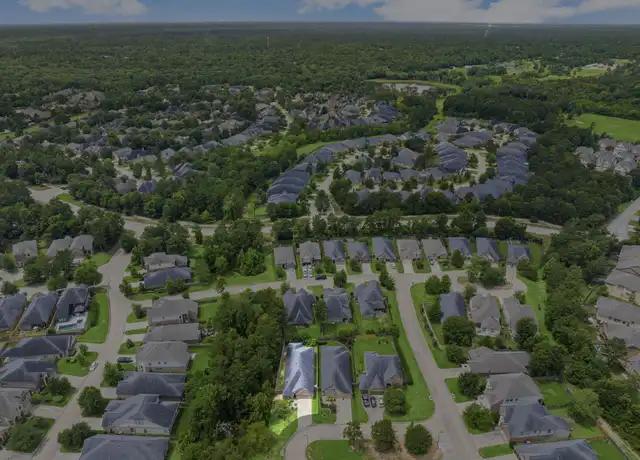
Two Woodforest Homes Cost $600,000. That Doesn't Mean They Cost the Same.
Imagine you've narrowed your search to two homes.
Both are listed at $600,000.
Both have four bedrooms.
Both have the space you need.
So financially, they're basically the same.
Right?
Not necessarily.
One may have different property taxes.
One has a pool.
Insurance quotes may differ.
One is larger and may cost more to heat and cool.
One may need a roof sooner.
One has extensive landscaping.
Suddenly, two identical purchase prices can create two very different ownership experiences.
That's why smart buyers don't ask only:
“Can we afford to buy this house?”
They ask:
“Are we comfortable owning it every month after closing?”
The Mortgage Payment Is Only the Beginning
When buyers talk about their “house payment,” they often mean everything bundled into one monthly number.
But several expenses can contribute to the real cost of ownership.
Depending on your financing and property, those may include:
Principal
Interest
Property taxes
Homeowners insurance
HOA-related costs
Mortgage insurance when applicable
Then there are costs outside the mortgage payment:
Utilities.
Maintenance.
Repairs.
Pool care.
Landscaping.
Future replacements.
That's the number your household actually lives with.
Start With Property Taxes
This is especially important when comparing homes.
Don't simply estimate taxes using a percentage you heard from a friend.
Property tax obligations can depend on the specific property, taxing jurisdictions, assessed value, exemptions, and other factors.
Review property-specific information carefully and ask appropriate professionals questions about how taxes may apply to your purchase.
A seller's current tax bill may not necessarily predict your future bill exactly.
Insurance Deserves an Actual Quote
This is another area where buyers sometimes rely on assumptions.
“Insurance should probably be around...”
Probably isn't enough when you're making a major purchase.
Insurance pricing can depend on many factors related to the property, coverage, insurer, deductibles, claims considerations, and current market conditions.
Get quotes early enough that you're not surprised later.
The Pool Has a Monthly Life After Closing
You love the pool.
That's great.
Now ask what owning it means.
Potential costs may include:
Routine service.
Chemicals.
Electricity.
Water.
Equipment repairs.
Future resurfacing or other major work.
This doesn't mean you shouldn't buy a pool home.
It means the pool should fit your budget as well as your lifestyle.
Larger Homes Can Have Larger Operating Costs
More square footage can mean more:
Space to cool.
Space to heat.
Windows.
Roof area.
Rooms to furnish.
Surfaces to maintain.
Potentially multiple HVAC systems.
Again, bigger isn't bad.
But buyers should understand that moving from a smaller home to a substantially larger one may change expenses beyond the mortgage.
Ask for Utility Context—but Use It Carefully
Historical utility information may provide some context when available.
But don't treat another household's bills as a guarantee.
Their thermostat settings may be completely different.
Their household may be larger.
They may work from home.
They may use the pool differently.
Energy rates can change.
Use historical information as one piece of the picture, not a promise about what you'll spend.
That Beautiful Landscaping Needs Care
You pull up to the house and immediately notice:
Perfect lawn.
Trimmed landscaping.
Mature plants.
Seasonal color.
Then you own it.
Now someone has to maintain it.
Maybe that's you.
Maybe you hire someone.
Either way, landscaping has a cost in time, money, or both.
The more elaborate the property, the more important it becomes to understand what maintaining the exterior may involve.
HOA Costs Should Be Understood Before Closing
If the property is subject to a homeowners association, review the relevant documents and current fees.
Buyers should understand:
Regular assessments.
Potential additional charges.
Applicable rules.
Property-specific obligations.
Don't rely solely on an old listing or verbal estimate.
Verify current information through appropriate documentation.
The Cheapest House Isn't Always the Cheapest to Own
Imagine House A costs slightly less.
Great.
But it may soon need:
HVAC work.
Exterior repairs.
New appliances.
Pool equipment.
Roof work.
House B costs more upfront but has recently completed major improvements.
Which is cheaper?
There isn't enough information yet.
That's the point.
Purchase price alone doesn't answer the question.
Maintenance History Matters
Ask what has already been done.
Depending on the property, useful information might include:
Roof age or work performed.
HVAC replacement or servicing.
Water heaters.
Pool equipment.
Appliances.
Exterior maintenance.
Other major systems.
A well-maintained older home may create a very different ownership picture from a newer-looking home with deferred maintenance.
Create a “Future Five” List
For every serious property, identify five significant things that may require money during your first several years of ownership.
For example:
HVAC
Roof
Water heaters
Pool equipment
Exterior maintenance
Your list will vary by property.
The goal isn't to predict exactly when something will fail.
It's to stop pretending nothing ever will.
Build Maintenance Into Your Budget
Homeownership involves maintenance.
Even a beautiful home.
Even a recently built home.
Even a fully renovated home.
Something will eventually need attention.
A realistic home-buying budget leaves room for ownership after the closing celebration ends.
If the mortgage consumes every available dollar, normal repairs can become financially stressful.
Don't Spend Your Entire Budget on the Purchase Price
Your lender may approve you for a particular amount.
That doesn't mean spending the maximum automatically makes sense for your household.
Ask yourself:
What monthly housing expense feels comfortable?
How much flexibility do we want?
What other goals matter?
Travel?
Savings?
Retirement?
Children's activities?
Investments?
Lifestyle?
The best home is one you can enjoy without resenting what it costs you every month.
Financing Can Make Two Identical Prices Different Too
Suppose two buyers purchase the same $600,000 home.
Their monthly costs may differ because of:
Down payment.
Interest rate.
Loan type.
Mortgage insurance.
Closing-cost decisions.
Other financing terms.
That's why online payment calculators are useful for rough estimates but shouldn't replace property-specific numbers from qualified professionals.
Ask for the Monthly Number Before Falling in Love
When you're seriously considering a home, create a realistic estimate.
Not just:
Mortgage: $____
Instead:
Estimated monthly housing costs:
Mortgage-related payment.
Taxes.
Insurance.
HOA.
Expected routine maintenance.
Pool expenses if applicable.
Utilities.
Other relevant property costs.
Now you have something much closer to the actual financial decision.
Then Add the “Life” Number
Here's where affordability becomes personal.
After paying for the home, what remains?
Can you still:
Save?
Travel?
Eat out?
Handle an unexpected repair?
Replace a vehicle?
Enjoy hobbies?
Invest?
Live the way you want?
A home should support your life.
It shouldn't become your entire life.
Don't Let the Preapproval Become Your Shopping Goal
If you're approved up to a certain amount, it's tempting to immediately search at that ceiling.
Instead, consider starting with the monthly cost you're comfortable carrying.
Then work backward.
That may produce a different purchase-price range.
And sometimes, a more comfortable one.
Compare Homes Using Ownership Cost
Here's a useful exercise.
When choosing between two Woodforest homes, create a simple comparison.
Home A
Purchase price
Estimated mortgage-related payment
Taxes
Insurance
HOA
Pool
Expected maintenance considerations
Utilities
Home B
Purchase price
Estimated mortgage-related payment
Taxes
Insurance
HOA
Pool
Expected maintenance considerations
Utilities
Now compare.
Suddenly, “same price” may not mean same cost at all.
Don't Forget Closing Costs
Monthly affordability isn't the only consideration.
Buyers should also understand the cash needed to complete the purchase.
Depending on the transaction and financing, closing costs and prepaid expenses may include various lender, title, insurance, tax, escrow, and other transaction-related items.
Get property- and loan-specific estimates from the appropriate professionals rather than relying on a generic percentage.
Leave Yourself Room to Enjoy the House
This may be the most important point.
You bought the home because you wanted:
More space.
A backyard.
A better lifestyle.
Room to entertain.
Maybe a pool.
Maybe access to everything you enjoy about Woodforest.
You should have enough financial breathing room to actually enjoy those things.
The most expensive house you're approved to purchase isn't automatically the best home for you.
Final Thoughts
Two Woodforest homes can have the same asking price and still create very different financial lives.
One may have higher ongoing expenses.
Another may have more maintenance coming.
One may have a pool.
Another may require improvements.
One may simply cost more to operate.
That's why the smartest buyers look beyond:
“What's the payment?”
They ask:
“What will living here realistically cost us?”
Then they go one step further:
“Does that cost still leave room for the life we want?”
Because getting the keys should feel exciting.
So should the first summer.
And the third year.
And the fifth.
The right home isn't simply one you can afford to close on.
It's one you can comfortably afford to keep living in.
Frequently Asked Questions
Do two homes with the same purchase price have the same monthly cost?
No. Property taxes, insurance, HOA costs, financing, utilities, pools, maintenance, and other property characteristics can create different ownership costs.
Can I use the seller's current property tax bill to calculate mine?
It may provide context, but your future tax obligation can differ. Buyers should review property-specific tax information and obtain appropriate guidance regarding their circumstances.
Should I get an insurance quote before making an offer?
Timing depends on your transaction, but obtaining property-specific insurance information early in the buying process can help you understand affordability and avoid surprises.
How much should I budget for home maintenance?
There isn't one percentage that works perfectly for every property. Age, condition, size, systems, pool, landscaping, and other characteristics can all affect maintenance needs.
Is buying below my maximum loan approval a good idea?
For some buyers, yes. Loan approval and personal comfort are different concepts. Consider your complete financial goals and desired monthly flexibility.
What's the biggest takeaway?
Compare Woodforest homes using the total ownership picture, not simply the asking price. The right home should fit both your housing needs and the financial life you want after closing.