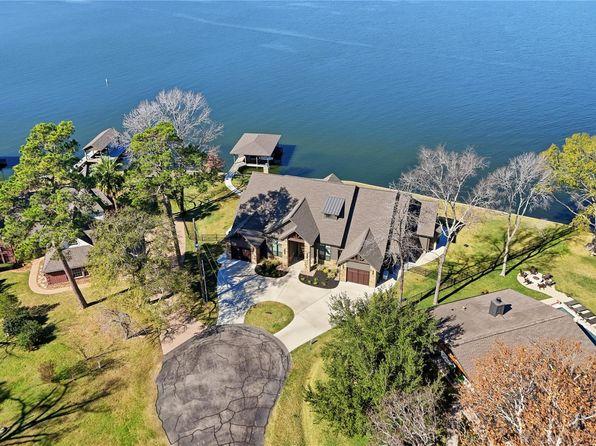
The Lake View Is Beautiful. But Can You Actually Use the Waterfront the Way You Want?
You walk through the house.
Nice kitchen.
Good floor plan.
Beautiful primary suite.
Then you reach the back windows.
And everything else disappears.
There it is.
Lake Conroe.
Water stretching beyond the backyard.
Maybe there’s a dock.
Maybe a boat is tied up.
Maybe the sun is hitting the water at exactly the right angle.
And suddenly the decision feels easy.
“This is the one.”
That reaction is understandable.
Waterfront property is emotional.
But before buying, there’s an important distinction to make:
Having a beautiful water view and having waterfront that works for your lifestyle are not necessarily the same thing.
If you're serious about a Lake Conroe property, don't stop at the view.
Walk all the way to the water.
Start With One Question: Why Do You Want Waterfront?
This sounds obvious.
It isn't.
Buyers want lakefront property for very different reasons.
Maybe you want:
A boat behind the house.
Fishing.
Kayaking.
Paddleboarding.
Sunset views.
Outdoor entertaining.
Quiet mornings.
Easy access to open water.
A vacation-like setting.
Or maybe you simply want to look at the lake.
All are legitimate reasons.
But they require different properties.
If You Own a Boat, Start With the Boat
Not the kitchen.
Not the primary bathroom.
Your boat.
What type is it?
How large?
What does it require?
How do you intend to store it?
How easily can you get from the property to the areas of Lake Conroe you expect to use?
A waterfront home that doesn't work well for your boat may defeat one of the main reasons you're paying for waterfront.
Don't Assume Every Dock Works for Every Boat
A dock may look perfect from the patio.
Walk down and inspect it more carefully.
Consider questions such as:
How is it configured?
Is there a lift?
What are the lift specifications?
What is the dock's condition?
What electrical equipment is present?
What modifications might you want?
If boating is central to your purchase, appropriate professional evaluation can be worthwhile.
Ask About Water Depth
This can be one of the most important waterfront questions.
Don't assume that because you see water, it works equally well for every type of boating.
Water depth can vary by location and conditions.
If reliable boat access is important, investigate the specific property carefully.
Ask for available information.
Talk with appropriate local professionals.
Understand the relationship between the dock, shoreline, and navigable water.
Water Levels Can Change
A lake isn't a swimming pool with an identical waterline every day.
Water levels can fluctuate due to weather, operations, drought, rainfall, and other conditions.
That means the waterfront you see during one showing represents one moment.
If water depth matters to your plans, understand how changing conditions may affect the property.
Look From the Dock Toward Open Water
This gives you a completely different perspective.
From the house, the view may be spectacular.
From the dock, ask:
How does the route out feel?
Are you in a cove?
A canal-like section?
More open water?
How much boating activity do you see?
Does the setting fit what you imagined?
This is where lifestyle becomes more important than photography.
Cove and Open-Water Living Can Feel Very Different
A more protected waterfront setting may appeal to buyers seeking:
Calmer-feeling water.
A quieter atmosphere.
Less exposure.
A more sheltered dock environment.
A more open location may appeal to buyers who prioritize:
Expansive views.
Direct lake feeling.
Broader water exposure.
Neither is automatically better.
They are different versions of waterfront living.
Open Water Can Mean More Exposure
The dramatic view may come with trade-offs.
Depending on the property, greater exposure can mean more:
Wave action.
Wind.
Weather exposure.
Shoreline considerations.
Dock exposure.
Again, don't assume that means the property is problematic.
Just understand the environment you're buying.
Watch Boat Traffic
Visit on a weekend if possible.
A quiet Tuesday morning may not show you how the water feels on a busy Saturday.
If you want activity and boating energy, you may love it.
If your dream is sitting quietly at the end of the dock, you may prefer a different setting.
Water traffic is part of the lifestyle.
Listen From the Backyard
Waterfront buyers naturally look.
Remember to listen.
Sit outside.
What do you hear?
Boats?
Music?
Neighbors?
Wildlife?
Road traffic?
Nothing?
The sound environment can vary dramatically between properties.
Your ideal lake experience is personal.
The Bulkhead May Matter More Than the Outdoor Kitchen
The outdoor kitchen is more exciting.
The shoreline infrastructure may be more important.
If a property has a bulkhead, seawall, retaining structure, or other shoreline improvement, understand its condition.
Look for available information regarding:
Age.
Repairs.
Maintenance.
Construction.
Previous work.
If condition is uncertain, appropriate professional evaluation may be advisable.
Shoreline Work Can Be Significant
This is why waterfront due diligence should go beyond a standard interior tour.
Waterfront infrastructure can involve specialized construction and maintenance.
If something appears to need attention, investigate before closing.
Don't assume:
“We'll deal with it later.”
until you understand what “later” may involve.
Look at the Dock as a Structure
A dock isn't simply a lifestyle accessory.
It's part of the property environment.
Depending on the dock, consider:
Decking.
Framing.
Roof structure.
Pilings.
Electrical.
Lighting.
Boat lift.
Water access.
General condition.
A beautiful sunset can make an aging dock look surprisingly charming.
Look again in daylight.
Dock Electrical Deserves Professional Attention
Water and electricity require appropriate safety measures.
If a dock has electrical service, lighting, outlets, lifts, or other powered equipment, inspection by appropriate qualified professionals may be warranted.
Don't make assumptions based on whether the lights turn on.
Safety matters.
Ask What You Are Allowed to Change
You buy the property.
That doesn't necessarily mean you can build anything you want along the waterfront.
Potential modifications may involve:
HOA rules.
Deed restrictions.
Permitting.
Lake or shoreline requirements.
Utility considerations.
Other applicable regulations.
If you intend to:
Expand the dock.
Replace it.
Add a lift.
Change shoreline structures.
Build outdoor improvements.
Investigate feasibility before making those plans part of the purchase decision.
“We'll Just Build a Bigger Dock” Is Not a Plan Yet
It's an idea.
A plan comes after you've verified:
Whether it is allowed.
What approvals are required.
Whether the site supports it.
What it may cost.
Don't pay a premium for a property based on an improvement you haven't confirmed you can make.
Look at the Backyard Between the House and Water
Buyers become so focused on the lake that they forget to evaluate the actual yard.
Ask:
How much usable space is there?
How steep is it?
How does it drain?
Is there room for entertaining?
Pool?
Pets?
Children?
Outdoor kitchen?
Lawn?
A waterfront home can have an incredible view but very little usable backyard.
That may be fine.
Just know it.
A Sloped Lot Can Create a Beautiful View
Elevation can produce dramatic sightlines.
But consider how you will move between:
House.
Patio.
Pool.
Yard.
Dock.
Lots of steps may not bother you.
Or they may matter greatly depending on your household.
Experience the entire route.
Don't just photograph it.
Walk From the Kitchen to the Dock
This is a surprisingly useful test.
Imagine carrying:
Cooler.
Food.
Towels.
Fishing gear.
Boat supplies.
Children's equipment.
How does the trip feel?
Easy?
Long?
Steep?
Lots of stairs?
Again, waterfront living is about use.
Think About Guests
Now imagine you're entertaining.
Where do people gather?
How does the patio connect to the yard?
Can guests reach the dock comfortably?
Is there enough outdoor seating?
Does the property flow well?
A waterfront home can be beautiful without being particularly good for large gatherings.
If entertaining matters, test the flow.
Pool Plus Lake Sounds Perfect—Until You Evaluate the Yard
Many buyers want both.
Great.
If the home already has a pool, examine how it interacts with the lake setting.
Does it preserve the view?
How private is it?
Is there enough deck space?
If the home doesn't have a pool, don't assume one can be added.
Investigate:
Lot dimensions.
Setbacks.
Easements.
Utilities.
Drainage.
HOA requirements.
Permitting.
Other waterfront considerations.
The View From Inside Matters Too
A premium waterfront property should be evaluated from the rooms where you'll actually spend time.
Stand in the:
Kitchen.
Living room.
Primary bedroom.
Office.
Breakfast area.
Can you see the water?
How much?
A house with a slightly smaller backyard may offer much stronger lake views from inside.
That could matter more to you.
Window Placement Can Change the Entire Experience
Two houses on the same water can feel completely different.
One may have:
Large windows.
Open living areas.
Water views from multiple rooms.
Another may have:
Smaller windows.
Rooms oriented away from the lake.
More limited interior views.
You're paying for waterfront.
Decide how often you want to actually see it.
Don't Let Sunset Make the Decision
This is difficult.
You tour at 6:45 p.m.
The lake turns gold.
Everything feels perfect.
You start mentally moving in.
Enjoy it.
Then return to due diligence.
A sunset tells you the property is beautiful.
It doesn't tell you:
Dock condition.
Water depth.
Bulkhead condition.
Insurance cost.
Drainage.
Restrictions.
Maintenance.
Those questions still matter tomorrow morning.
Ask About Waterfront Maintenance
Owning on the water can involve maintenance beyond a typical residential lot.
Depending on the property, this may include attention to:
Dock.
Lift.
Shoreline structures.
Outdoor materials.
Landscaping.
Debris.
Weather exposure.
Other waterfront components.
Understand which responsibilities belong to you.
Weather Exposure Can Be Different Near Open Water
Waterfront homes may experience different exposure to:
Wind.
Moisture.
Sun.
Storms.
Waves.
Outdoor materials can require regular maintenance.
Look at:
Railings.
Metal.
Wood.
Paint.
Outdoor fixtures.
Dock components.
Patio features.
The lake is beautiful.
It's also an environment.
Insurance Should Be Investigated Early
Don't wait until you've mentally bought the house.
Get property-specific insurance information.
Depending on the property and coverage, you may need to consider:
Homeowners insurance.
Flood-related coverage.
Wind/hail deductibles.
Coverage for certain waterfront structures.
Other property-specific insurance considerations.
Ask your insurance professional exactly what is and isn't covered.
Don't Assume the Dock Is Covered the Way You Expect
This is worth a separate question.
Policies can differ.
Waterfront structures, boat lifts, and other improvements may have specific coverage considerations or limitations.
Ask.
A dock may represent a meaningful part of the property's value to you.
Understand how your insurance treats it.
Flood Due Diligence Still Matters
Being waterfront obviously makes water-related questions especially relevant.
Review appropriate property-specific flood information.
Consider:
Available maps.
Elevation information where relevant.
Seller disclosures.
Insurance requirements.
Historical information where available.
Professional guidance.
No single source guarantees future conditions.
Use multiple sources to understand the property.
Ask About Previous Storm Damage
If available disclosures or property records indicate previous storm, water, dock, shoreline, or other damage, understand:
What happened?
What was repaired?
Who performed the work?
What documentation exists?
Don't automatically reject a property because something happened.
Understand the event and the repair.
The Cheapest Waterfront Home May Not Be the Cheapest Waterfront to Own
Imagine two properties.
Home A
Lower purchase price.
But potentially needs:
Dock work.
Shoreline work.
Outdoor repairs.
Pool improvements.
Home B
Higher purchase price.
But major waterfront components appear to have been more recently addressed.
Which is the better value?
You need more information before answering.
Purchase price is only the first number.
Compare Waterfront Infrastructure Separately
When comparing final contenders, create a separate category for:
Water Access
Depth and usability for your plans.
Dock
Condition and configuration.
Shoreline
Condition and infrastructure.
View
From yard and interior.
Exposure
Cove, canal-like setting, open water, or other configuration.
Outdoor Flow
House to patio to water.
Restrictions
What you can and cannot modify.
Now you're comparing waterfront—not just houses.
The Best House May Not Have the Best Waterfront
This creates difficult decisions.
Home A:
Better kitchen.
Better primary suite.
More updated.
Home B:
Better dock.
Better water access.
Better lake view.
More usable waterfront.
Which should you choose?
Remember:
You can renovate a kitchen.
Changing the fundamental waterfront setting may be much harder—or impossible.
Permanent characteristics deserve serious weight.
The Best Waterfront May Not Have the Best House
And that can sometimes create opportunity.
If the property has:
The view.
The lot.
The water access.
The dock location.
The setting you want.
but the interior is dated, ask whether you're comfortable improving the house over time.
For some waterfront buyers, that's a much better trade than buying a perfect interior on water they don't love.
Use the “Boat Morning” Test
Imagine it's Saturday.
You decide to take the boat out.
How many steps are there between:
“Let's go”
and actually being on open water?
If boating is the reason you're buying waterfront, that answer matters.
Then Use the “No Boat” Test
Now imagine you never buy a boat.
Would you still love the property?
The view?
The sunsets?
The outdoor space?
The privacy?
The lake atmosphere?
If yes, you've learned that the waterfront has value to you beyond boating.
That's useful.
And Finally, Use the “February Tuesday” Test
No party.
No summer vacation.
No sunset cocktail.
It's an ordinary Tuesday.
You look out the kitchen window.
Would the lake still make you happy you paid for waterfront?
That's the real test.
Because most of homeownership happens on ordinary days.
Final Thoughts
Buying a waterfront home on Lake Conroe is different from buying a home that simply happens to have a nice backyard.
The water is part of the property decision.
And it deserves its own due diligence.
So yes—look at the view.
Enjoy the sunset.
Imagine the boat.
Picture mornings on the dock.
But then investigate:
Water depth.
Dock condition.
Boat access.
Shoreline infrastructure.
Bulkhead condition where applicable.
Restrictions.
Outdoor flow.
Drainage.
Insurance.
Flood considerations.
Maintenance.
And what the waterfront actually allows you to do.
Because the best Lake Conroe property isn't necessarily the house with the most dramatic listing photo.
It's the one where the house, lot, waterfront, and your actual lake lifestyle all work together.
So before saying:
“Look at that view.”
Walk down to the water.
And ask:
“Can we live the life we're imagining from this property?”
That question may be much more important.
Frequently Asked Questions
Is every Lake Conroe waterfront property suitable for a boat?
Not necessarily. Water depth, dock configuration, location, lake conditions, boat specifications, restrictions, and other property-specific factors can affect usability. Buyers should investigate based on their intended use.
Should I have a Lake Conroe dock inspected?
If the dock is an important part of the purchase, appropriate professional evaluation can help you better understand its condition, including structural and electrical components where relevant.
What should I know about a bulkhead before buying?
Understand its apparent condition, available history, repairs, and maintenance. If concerns exist, seek evaluation from an appropriately qualified waterfront or structural professional.
Can I replace or enlarge a dock after buying?
Possibly, but don't assume. Proposed work may be subject to HOA restrictions, permitting, shoreline requirements, and other regulations. Verify before relying on future modifications.
Should I get an insurance quote early for a waterfront property?
Yes, obtaining property-specific insurance information early can help you understand premiums, deductibles, flood-related considerations, and coverage for waterfront improvements.
Is the best lake view always the best waterfront?
No. A spectacular view may not provide the water depth, dock configuration, protection, outdoor space, or boating access you want. Evaluate both the view and the usability of the waterfront.