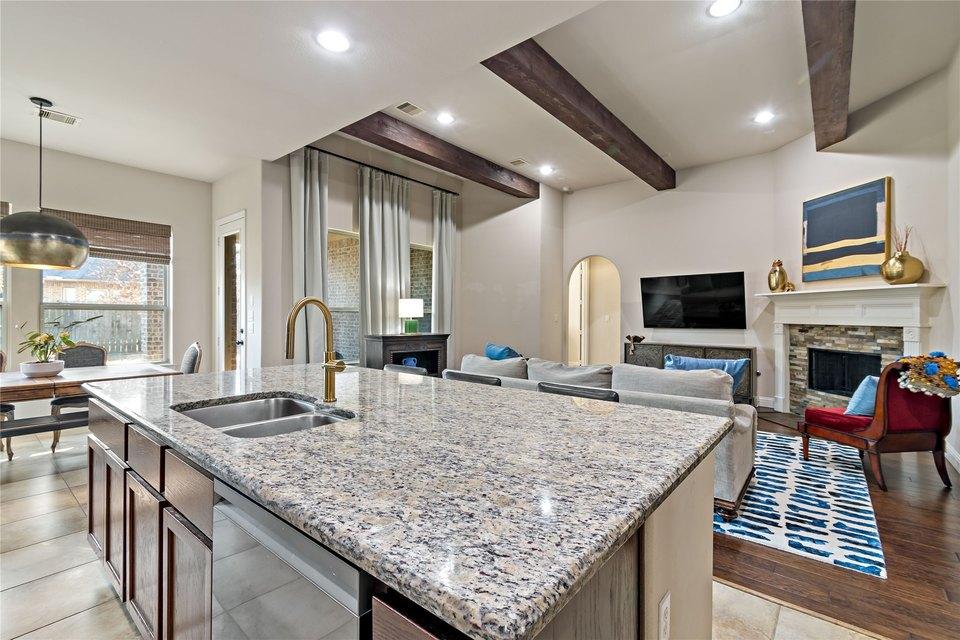
Buyers Like Your Woodforest Home. So Why Aren’t They Making an Offer?
Why Do Buyers Like Your Woodforest Home but Still Not Make an Offer?
The showing feedback comes in.
“Beautiful home.”
Great.
Another buyer:
“Very well maintained.”
Excellent.
Another:
“Loved the kitchen.”
Even better.
Then nothing happens.
No offer.
A few days later, another showing.
More positive feedback.
Still no offer.
This can be one of the most confusing situations for a seller.
If buyers like the house, why aren't they buying it?
Because buyers don't make offers based solely on whether they like a property.
They make offers after deciding that your property gives them the best combination of:
Price.
Location.
Condition.
Features.
Lot.
Monthly cost.
Lifestyle.
Compared with the other homes available to them.
That distinction changes how sellers should interpret showing activity.
“Beautiful Home” Is Not the Same as “Best Choice”
A buyer can genuinely think your home is beautiful.
Then purchase another one.
Those statements do not contradict each other.
Maybe the competing home has:
Better lot.
More privacy.
Three-car garage.
Pool.
Preferred floor plan.
Lower price.
Better incentives.
Newer major systems.
Closer location to something important to them.
Your home doesn't have to be bad to lose.
Another property only has to fit that buyer better.
Sellers Compete for Decisions, Not Compliments
The goal of a listing is not to receive positive feedback.
It's to create enough value that a qualified buyer decides:
“This is the one we don't want to lose.”
That is a much higher standard than:
“We liked it.”
The Real Competition May Not Be the House Next Door
This is important in a master-planned community.
A buyer considering your Woodforest home may also consider:
Another Woodforest section.
Nearby Montgomery.
Lake Conroe-area options.
The Woodlands-area alternatives depending on their budget and priorities.
New construction.
Resale.
Their search boundary may be much wider than yours.
Sellers Think in Neighborhoods. Buyers Often Think in Budgets.
A seller may say:
“That house isn't really comparable. It's in another section.”
The buyer may say:
“They're both $650,000.”
That buyer compares what the same money buys.
Your competition is partly defined by geography.
It is also defined by price.
Search Like the Buyer
One of the most useful exercises for a seller is simple.
Take your asking price.
Look at what else a buyer could reasonably consider around that amount.
Not just identical houses.
Ask:
What does $600,000 buy?
What does $650,000 buy?
What does $700,000 buy?
Depending on your price range.
Now your listing looks different.
Buyers Compare Packages
Imagine two homes.
Your Home
$675,000.
Beautiful interior.
Four bedrooms.
Two-car garage.
No pool.
Competing Home
$690,000.
Slightly less updated.
Three-car garage.
Pool.
More private backyard.
The buyer isn't simply comparing:
$675,000 versus $690,000.
They're asking:
“What do we get for another $15,000?”
That difference can become powerful.
Small Price Differences Feel Smaller to Buyers Than Sellers Expect
A seller may see:
$20,000 more.
A financed buyer may evaluate that difference through the change in:
Down payment.
Monthly principal and interest.
Taxes.
Insurance.
Other ownership costs.
That doesn't mean the more expensive property is affordable or better.
It means buyers often compare the incremental cost against the incremental lifestyle benefit.
Your Home Can Accidentally Sell the More Expensive House
This happens.
A buyer tours yours.
Then tours another home $25,000 higher.
They think:
“For a little more, we get the pool and third garage bay.”
Your listing helped establish the value of the competitor.
That is why pricing cannot be evaluated in isolation.
The Reverse Can Work in Your Favor
Your home is $25,000 less.
Buyer tours the expensive competitor.
Then yours.
They think:
“We don't need the pool. I'd rather keep the difference.”
Now the competitor helps sell your house.
Positioning is relative.
New Construction Can Be Part of the Competition
Resale sellers sometimes ignore new homes because:
Different builder.
Different section.
Different lot.
Different product.
Buyers may not care.
If new construction falls within their:
Budget.
Location range.
Size needs.
they may compare it with your resale.
New Construction Changes the Value Conversation
A buyer may see:
Brand-new finishes.
Builder warranty.
Current design.
Possible incentives.
No previous owner.
Then compare your home.
That does not automatically mean new construction wins.
Your resale may offer:
Established landscaping.
Known surroundings.
Completed window treatments.
Finished backyard.
Pool.
Upgraded patio.
Mature setting.
Potentially more immediate availability.
The seller needs to understand which advantages are meaningful.
Don't Compete With “New” by Pretending Your Home Is New
Instead, sell what the resale offers.
Maybe:
No waiting.
Finished landscaping.
Blinds already installed.
Established street.
Completed improvements.
Outdoor living already built.
You want buyers to understand the value of finished ownership.
Buyers Price the Projects They See
You know the carpet has another few years.
The buyer thinks:
“Replace carpet.”
You know the paint is fine.
Buyer thinks:
“Repaint entire house.”
You know the landscaping just needs trimming.
Buyer thinks:
“Redo landscaping.”
Buyers mentally assign costs to changes.
And their estimates may be higher than yours.
Buyers Also Price Inconvenience
This matters.
A $5,000 project may feel like:
Contractor.
Scheduling.
Dust.
Moving furniture.
Time.
A buyer may pay more than $5,000 to avoid doing it.
Move-in readiness has emotional and practical value.
Small Repairs Can Create Large Doubts
Loose handle.
Cracked switch plate.
Dripping faucet.
Door that sticks.
Damaged trim.
None may be individually serious.
But together they can create a question:
“What else hasn't been maintained?”
Buyers often use visible condition as a clue about invisible condition.
Maintenance Tells a Story
You want the home to communicate:
“This property has been cared for.”
That story is built through:
Cleanliness.
Working fixtures.
Maintained landscaping.
Fresh caulk where needed.
Functional doors.
Clean HVAC registers.
Good lighting.
Organized mechanical areas.
Details matter.
Don't Renovate Everything Before Selling
This is the opposite mistake.
Seller hears:
“Buyers want updated.”
Suddenly:
New kitchen.
New bathrooms.
New flooring.
Major spending.
That may not be necessary.
The goal is not automatically to create a model home.
The goal is to identify which improvements materially affect:
Buyer perception.
Marketability.
Price positioning.
Start With Friction
Ask:
What makes a buyer hesitate?
Maybe:
Dark paint.
Worn carpet.
Obvious repair.
Overgrown landscaping.
Strong odor.
Poor lighting.
Clutter.
These may deserve attention before expensive remodeling.
The First Five Minutes Matter
A buyer forms an impression quickly.
Drive up.
Front yard.
Entry.
Smell.
Light.
Main living area.
Kitchen.
Within minutes, they begin deciding whether the home feels:
Well maintained.
Bright.
Spacious.
Comfortable.
Worth the price.
Your presentation should support that early impression.
Curb Appeal Doesn't Need to Be Elaborate
You don't necessarily need:
Expensive landscape redesign.
You may need:
Trimmed shrubs.
Clean beds.
Healthy lawn where practical.
Clean driveway.
Fresh-looking entry.
Working exterior lights.
Clean front door.
The goal is:
“This home is cared for.”
The Front Door Is a Surprisingly Important Moment
The agent unlocks the door.
Buyers stand there.
They notice:
Door condition.
Hardware.
Cobwebs.
Paint.
Entry cleanliness.
Then the door opens.
This is your home's first close-up.
Make it good.
Smell Can End a Showing Before the Kitchen Starts It
Pet odor.
Cooking odor.
Smoke.
Mustiness.
Overpowering fragrance.
Sellers sometimes become accustomed to household smells.
Buyers have not.
Neutral and clean is generally safer than trying to perfume the property.
Over-Fragrancing Can Create Suspicion
Ten plug-ins don't necessarily communicate:
“Fresh.”
They may communicate:
“What are they covering?”
You want clean air, not a fragrance showroom.
Temperature Matters
A showing in a warm house during a hot Texas day can make the property feel uncomfortable.
Buyers may rush.
They may wonder about HVAC.
They may remember the discomfort more than the features.
When practical, showing conditions should make buyers want to stay.
Light Matters Too
Open appropriate blinds.
Replace burned-out bulbs.
Use consistent lighting where practical.
Turn on lights for showings if your plan allows.
Dark rooms often feel smaller and less inviting.
Don't Hide the Windows
The Woodforest lifestyle may include:
Trees.
Yards.
Outdoor spaces.
Views.
Let buyers see outside.
Heavy window coverings can unintentionally remove one of the property's strongest features.
Decluttering Is About Space, Not Minimalism
You do not need an empty home.
You want buyers to understand:
Room size.
Storage.
Traffic flow.
Furniture possibilities.
Too much furniture can make large rooms feel smaller.
Too little can make some spaces difficult to understand.
Balance matters.
Storage Areas Are Part of the Showing
Buyers open:
Pantry.
Closets.
Cabinets.
Garage.
If every storage area is overflowing, the message may become:
“This house doesn't have enough storage.”
Even when the real issue is simply too many belongings.
Pre-Packing Can Help
You're moving anyway.
Consider packing:
Seasonal clothes.
Decor.
Unused kitchen items.
Extra linens.
Storage-room contents.
This can make closets and cabinets easier for buyers to evaluate.
The Garage Deserves Attention
Woodforest buyers may value garage space for:
Vehicles.
Storage.
Tools.
Bikes.
Recreation.
If the garage is packed wall-to-wall, buyers can't easily understand its usefulness.
You don't need to stage it like a living room.
You do want them to see it.
The Backyard May Be Selling the Lifestyle
Especially if you have:
Pool.
Covered patio.
Outdoor kitchen.
Large yard.
Privacy.
Golf-course setting.
Open-space relationship.
Make that area easy to understand.
Clean furniture.
Trim landscaping.
Remove unnecessary clutter.
Clean pool if applicable.
Don't Make Buyers Imagine What the Pool Looks Like Clean
If you're selling a pool home, the pool is part of the product.
Water clarity.
Deck condition.
Furniture.
Equipment area.
All contribute to perception.
A neglected pool can turn an asset into a concern.
Shade Can Be a Selling Feature
If your patio is well shaded, demonstrate it.
Photos and showing preparation should help buyers understand:
Covered space.
Fans.
Seating.
Outdoor dining.
This is particularly valuable when buyers imagine summer use.
Privacy Needs to Be Visible
If the backyard has excellent privacy, don't hide it with poor photography.
Show:
Tree line.
Landscaping.
Lot spacing.
Open area.
A buyer can't value a feature they never notice.
But Don't Oversell Privacy
If neighboring homes are visible, don't describe the property in a way that creates an expectation the showing cannot support.
Accurate marketing builds trust.
Floor Plan Confusion Can Kill Interest
A buyer enters a room and asks:
“What is this supposed to be?”
That's friction.
If a space has an unusual purpose, staging can help explain it.
Office.
Dining.
Game room.
Flex space.
Show a logical use.
Empty Rooms May Need Context
Vacant homes sometimes make room size difficult to judge.
Professional staging, selective staging, or accurate virtual presentation where appropriately disclosed can help buyers understand scale.
The goal is clarity.
Over-Staging Can Backfire Too
Too much decorative styling can distract from:
Room.
Windows.
Floor plan.
Architecture.
Buyers should remember the house.
Not the collection of accessories.
Your Photos Determine Whether Many Buyers Ever Visit
Before a showing happens, the listing usually has to win online.
Buyers scroll quickly.
Your photos need to communicate:
Exterior.
Main living area.
Kitchen.
Primary suite.
Backyard.
Important upgrades.
Lifestyle features.
The order matters.
Your First Photo Has One Job
Make the buyer stop scrolling.
That doesn't always mean exterior.
Depending on the property, the strongest image might be:
Exterior.
Pool.
Kitchen.
Living room.
View.
The hero photo should communicate the property's strongest reason to click.
More Photos Are Not Automatically Better
Thirty strong images?
Great.
Fifty images including:
Closet corners.
Toilets.
Utility walls.
Repeated angles.
Maybe not.
Every photo should help explain or sell the property.
The Listing Description Should Add Information
Photos show what the home looks like.
The description should help buyers understand:
Why the location matters.
What improvements were completed.
How spaces function.
What makes the lot distinctive.
What lifestyle the property supports.
Avoid simply narrating:
“Here is the kitchen. Here is the bedroom.”
The buyer can see that.
Buyers Need Reasons to Choose Your Home
Think about your top three.
Maybe:
Private backyard.
Three-car garage.
Major updates.
Pool.
Excellent outdoor living.
Convenient location within Woodforest.
Large lot.
Flexible floor plan.
Those advantages should be obvious in the marketing.
If You Can't Identify the Top Three, Buyers May Struggle Too
Every listing needs positioning.
Not:
“Four-bedroom home for sale.”
But:
“Why should a buyer choose this four-bedroom home instead of the other six they're considering?”
That is the marketing question.
Price Is Part of Marketing
Price isn't something separate from presentation.
It determines:
Which buyers see the home.
Which properties they compare it against.
What expectations they bring.
A home priced at one level may look exceptional.
At another, merely average.
The Market Does Not Know What You Need to Net
You may need:
A certain amount for your next purchase.
Debt payoff.
Moving costs.
Financial goal.
Those needs are real.
But buyers compare your property with alternatives.
Your personal net requirement does not determine market value.
What You Paid Doesn't Determine Today's Value Either
Bought for $500,000.
Spent $70,000.
Want $650,000.
The arithmetic feels logical.
But the current market evaluates:
Comparable sales.
Competition.
Condition.
Location.
Demand.
Features.
Your cost basis and market value are separate concepts.
Improvements Need Market Context
You added:
Outdoor kitchen.
Custom built-ins.
Premium landscaping.
Great.
Those improvements may contribute value.
But not necessarily dollar-for-dollar.
The question is:
How does the market respond to the completed property?
Buyers Don't Pay Equally for Every Upgrade
One buyer loves your:
Built-in wine storage.
Another would rather have:
More pantry space.
Specialized improvements can be valuable without appealing equally to everyone.
This is why broad functionality often matters.
Price Reductions Work Best When They Change Positioning
A tiny reduction may change nothing.
Suppose:
$704,900 becomes $699,900.
That may matter because it can place the property under a common search threshold.
Other times a small reduction doesn't materially change:
Search exposure.
Competitive position.
Buyer perception.
Price adjustments should have a reason.
Don't Chase the Market Down Slowly Without a Strategy
If the evidence suggests the home is meaningfully overpriced, repeated small reductions can create:
Longer market time.
Buyer questions.
A stale-listing perception.
Sometimes a more decisive repositioning is worth discussing.
The right strategy depends on current market data.
Showing Volume Is Information
No showings?
Potential questions:
Price?
Photos?
Marketing?
Availability?
Buyer demand?
Many showings but no offers?
Different questions:
Condition?
Value?
Competition?
Feature mismatch?
Showing activity helps diagnose where the problem may be.
Zero Showings Is Different From Ten Showings and Zero Offers
Those are not the same problem.
Very Few Showings
Buyers may be rejecting the listing before visiting.
Many Showings, No Offers
Buyers are interested enough to visit but something is preventing commitment.
The response should differ.
Showing Feedback Is Useful—but Imperfect
One buyer says:
“Too small.”
Another:
“Great size.”
One:
“Too far from entrance.”
Another loves the quiet location.
Feedback is subjective.
Look for repeated themes.
Repeated Feedback Deserves Attention
If one person dislikes the paint?
Preference.
If eight buyers mention the same issue?
Pattern.
Patterns deserve investigation.
They may indicate:
Price adjustment.
Presentation improvement.
Repair.
Marketing clarification.
Or simply a permanent property characteristic that must be reflected in price.
Some Problems Cannot Be Staged Away
Road location.
Lot size.
Neighbor proximity.
Two-car versus three-car garage.
Floor-plan limitation.
These are property characteristics.
You can't fix them with:
Flowers.
New pillows.
Professional photos.
Instead, the price and positioning must account for them.
Stop Apologizing for Permanent Features
Suppose the home has:
Smaller yard.
Don't market defensively.
Identify the buyer who may appreciate:
Less yard maintenance.
Great covered patio.
Community amenities.
Likewise, a home without a pool may appeal to buyers who do not want pool maintenance.
Every property has trade-offs.
Don't Pretend a Weakness Is a Feature
Small backyard?
Don't call it:
“Expansive outdoor oasis.”
Buyers will see it.
Credibility matters.
Present the real strengths.
Make the Trade-Off Feel Worth It
Maybe your home has a smaller lot.
But it also offers:
Lower price.
Beautiful interior.
Three-car garage.
Better location.
Newer systems.
Now the buyer can understand the trade.
A property doesn't have to win every category.
It needs to win enough of them.
Incentives Can Sometimes Address Buyer Friction
Depending on the market and transaction, a seller may consider negotiating toward:
Closing costs.
Rate-related concessions.
Repairs.
Other allowable terms.
But concessions should support an overall pricing strategy—not disguise a property that is fundamentally mispositioned.
Discuss options with appropriate real estate and lending professionals.
A Buyer May Care More About Cash Today Than Price
Two offers can feel financially different even at similar purchase prices.
A buyer may be especially sensitive to:
Closing costs.
Immediate repairs.
Cash needed after closing.
This is why transaction structure can sometimes matter.
But Don't Offer Everything Before Anyone Asks
Sellers can become anxious.
Then immediately advertise:
Price reduction.
Closing costs.
Repairs.
Home warranty.
Everything.
Sometimes that creates more questions than confidence.
Use incentives strategically.
Days on Market Change Buyer Psychology
As a listing sits, buyers may begin asking:
What's wrong?
How negotiable are they?
Why hasn't anyone bought it?
That doesn't mean the home becomes undesirable.
But longer market time can change negotiation dynamics.
Early Positioning Matters
The first period on market often includes:
Buyers already searching.
Agents watching new inventory.
People waiting for the right property.
You want the home to make sense when that audience first sees it.
Correcting an avoidable pricing or presentation issue later may mean losing some initial momentum.
Don't Test a High Price Just Because “We Can Always Come Down”
Technically, yes.
Strategically, there can be a cost.
Buyers may never visit.
Competing homes may sell.
Market time accumulates.
The question isn't:
“Can we reduce later?”
It's:
“What launch position gives us the strongest chance of attracting serious buyers now?”
Your Best Offer May Not Be Your Highest Offer
Once offers arrive, sellers should evaluate more than headline price.
Depending on the transaction:
Financing.
Contingencies.
Closing timeline.
Concessions.
Option or inspection terms.
Appraisal considerations.
Other conditions.
The strongest overall offer may not always have the highest number at the top.
Don't Mentally Spend an Offer Before Evaluating It
An offer comes in.
Exciting.
Pause.
Understand the full terms with your real estate professional.
Net proceeds and transaction certainty can depend on more than sale price.
The Buyer Is Comparing You Until the Decision Is Made
Even after loving your home, they may tour another.
This is why sellers should maintain showing readiness while negotiations are developing as appropriate to their situation and listing status.
Don't assume interest equals commitment.
Use the “Would We Buy Ours?” Test
Pretend you're the buyer.
You have your asking price.
Would you choose your home over the competition?
Why?
Be specific.
If the answer relies on:
“Because ours is ours,”
that's emotion.
Try again.
Use the “$25,000 More” Test
What can a buyer get for $25,000 more?
Pool?
Larger home?
Three-car garage?
Better lot?
Now ask whether your price difference feels compelling enough.
Use the “$25,000 Less” Test
What happens if the buyer spends less?
Do they lose:
Major updates?
Location?
Size?
Outdoor living?
If cheaper alternatives offer nearly the same experience, that deserves attention.
Use the “Five-Minute Online” Test
Look at your listing beside five competitors.
Don't open detailed descriptions yet.
Only look at:
Price.
First photo.
Basic specifications.
Initial image set.
Which would you click first?
That's approximately how quickly buyers can begin filtering.
Use the “After the Showing” Test
Imagine buyers sitting in their car afterward.
What are they saying?
“I loved the kitchen, but…”
What comes after but?
Price?
Yard?
Garage?
Location?
Floor plan?
Condition?
That word often reveals your actual obstacle.
Create a Woodforest Seller Scorecard
Rate your listing against serious competition:
Price
Does it make sense relative to alternatives?
Online Presentation
Would the photos make you click?
Condition
Does the home communicate good maintenance?
Kitchen and Baths
How do they compare at this price?
Major Systems
What information can buyers understand about roof, HVAC, and other important components?
Floor Plan
Is it functional for likely buyers?
Garage and Storage
How competitive are they?
Lot and Privacy
Does the property offer a clear advantage or disadvantage?
Outdoor Living
Is the backyard being marketed effectively?
Location Within Woodforest
Does the listing explain its practical advantages?
Competition
What can buyers get for slightly more or slightly less?
Showing Feedback
Are repeated patterns emerging?
Now you have something more useful than:
“I don't understand why nobody has made an offer.”
Final Thoughts
A Woodforest home can be:
Beautiful.
Clean.
Updated.
Well maintained.
And still not receive an offer.
That doesn't necessarily mean buyers dislike it.
It may mean the value equation hasn't become strong enough for someone to choose it over the alternatives.
Selling successfully requires looking beyond your own property.
You need to understand:
What else buyers can purchase.
What slightly more money gets them.
What slightly less money gets them.
How your location compares.
How your lot compares.
Whether your upgrades matter to today's buyer.
Whether your presentation makes those advantages obvious.
And whether your price makes the trade-offs feel worthwhile.
So when the feedback says:
“Beautiful home.”
but no offer follows, don't dismiss the compliment.
But don't stop there either.
Ask the more useful question:
“Beautiful compared with what—and at what price?”
That is where the real selling strategy begins.
Frequently Asked Questions
Why am I getting Woodforest showings but no offers?
Frequent showings without offers can indicate that buyers are interested but choosing competing properties based on price, features, condition, lot, location, monthly cost, or another factor. Look for patterns in feedback and current competition.
Should I reduce my price immediately if I have no offers?
Not automatically. First evaluate showing volume, market conditions, comparable properties, presentation, feedback, and how the home is positioned. A price adjustment should be part of a broader strategy.
Does new construction compete with my Woodforest resale?
It can when buyers consider both options within the same budget and general location. Sellers should understand current new-construction alternatives and clearly communicate the advantages of their completed resale property.
Should I renovate my kitchen before selling?
Not necessarily. The decision depends on the current condition, competing homes, expected market response, cost, timing, and whether a smaller improvement could address buyer concerns more efficiently.
How important are listing photos?
Very important. Online presentation often determines whether a buyer decides to schedule a showing, so photographs should clearly communicate the home's strongest features and overall condition.
Should I stage an occupied Woodforest home?
Staging can range from rearranging existing furniture and decluttering to more extensive professional staging. The goal is to make room size, function, flow, and the property's strongest lifestyle features easy for buyers to understand.
What showing feedback should I pay the most attention to?
Repeated themes generally deserve more attention than isolated preferences. If multiple buyers independently identify the same concern, investigate whether it relates to presentation, price, condition, or a permanent property characteristic.
What's the biggest takeaway?
Buyers don't make offers simply because they like your Woodforest home. They make offers when they believe it provides a stronger overall value than the alternatives available to them. Your pricing, presentation, condition, and marketing should make that choice as clear as possible.