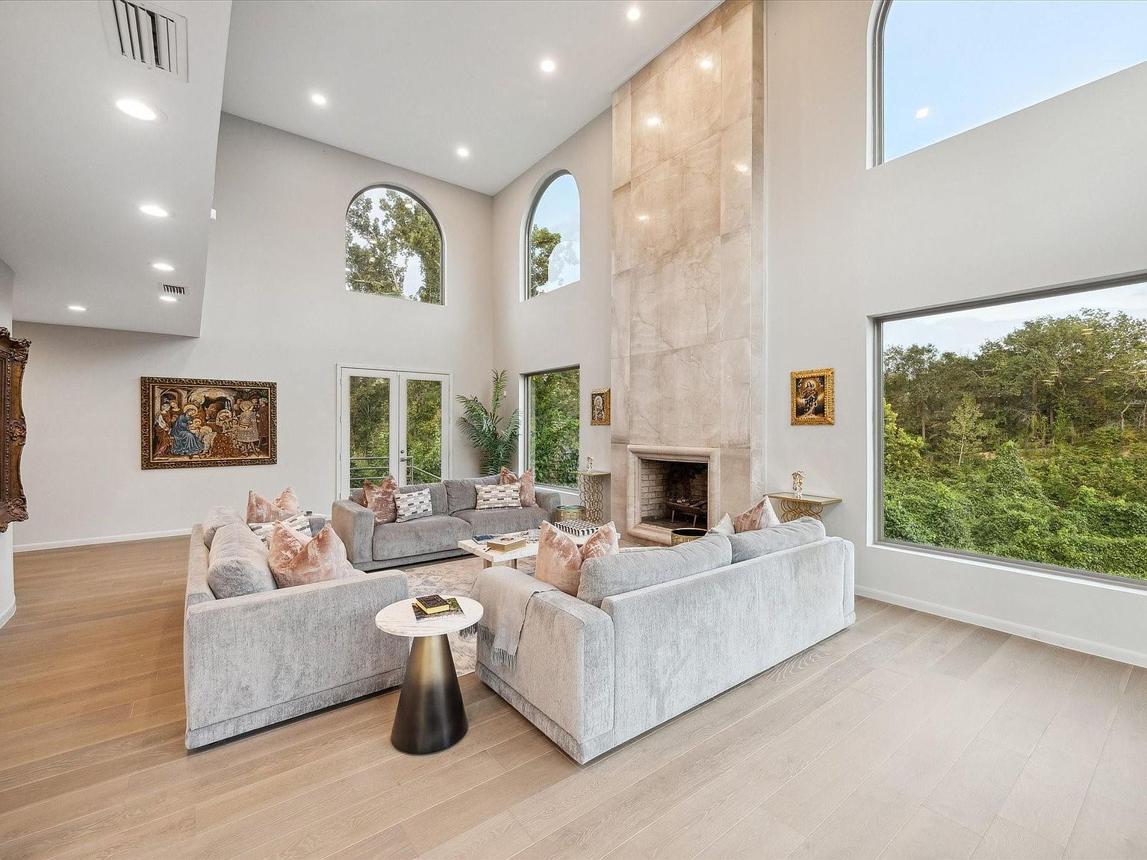
Your Home Is 4,000 Square Feet—So Why Does It Feel Smaller?
The listing says 4,000 square feet.
The buyer knows that before walking through the door.
Then they finish the showing and say something that makes absolutely no sense:
“It felt a little small.”
Small?
Four thousand square feet?
How?
Because buyers don't experience homes with calculators.
They experience them with their eyes.
And there's a surprisingly big difference between a home that is large and a home that feels spacious.
Square Footage Doesn't Tell Buyers How a Home Lives
Two homes can have exactly the same square footage and feel completely different.
One feels open.
Easy.
Comfortable.
The other feels crowded.
Busy.
Hard to navigate.
Why?
Because buyers aren't walking around adding room dimensions together.
They're noticing:
Sightlines.
Furniture.
Natural light.
Ceiling height.
Walking paths.
Storage.
How rooms connect.
Those details shape their perception almost immediately.
Start With the Furniture
Here's one of the most common culprits.
Furniture that's too large for the room.
Maybe that sectional was perfect for family movie nights.
Maybe the oversized recliners are incredibly comfortable.
But if buyers have to squeeze between furniture to walk through the room, their brain quietly concludes:
“This room isn't very big.”
Even when it is.
Your Furniture Should Show Scale, Not Consume It
The purpose of furniture during a sale changes.
You're no longer arranging the home only around how your family uses it.
You're helping buyers understand the architecture.
That may mean temporarily removing:
An extra chair
Oversized end tables
A second dresser
Large exercise equipment
Additional storage pieces
You don't need empty rooms.
You need breathing room.
Watch the Walking Paths
Walk from the front door to the kitchen.
Then the kitchen to the backyard.
Then the primary bedroom to the bathroom.
Did you have to move around furniture?
Turn sideways?
Navigate around a table?
Buyers notice friction.
A home feels larger when movement feels effortless.
Light Changes Everything
Dark spaces almost always feel smaller.
Open:
Blinds.
Shutters.
Curtains.
Clean the windows.
Replace burned-out bulbs.
Make sure lighting is consistent throughout the home.
If a beautiful room has large windows, don't hide them.
Natural light creates visual depth.
And visual depth creates spaciousness.
Look at What's Blocking Your Sightlines
Stand at your front door.
What can you see?
Now stand in your kitchen.
What can you see from there?
Long, uninterrupted sightlines make homes feel larger.
Tall furniture, heavy curtains, cluttered countertops, and oversized décor can visually break up those sightlines.
Sometimes removing one large object changes the entire room.
Countertops Matter More Than Sellers Think
A kitchen may be huge.
But if the counters are covered with:
Coffee machines.
Air fryers.
Mail.
Knife blocks.
Decorative trays.
Paper towels.
Cookbooks.
Appliances.
Buyers don't see the countertop.
They see what's sitting on it.
Clear most of it away.
Suddenly, the kitchen looks bigger without changing a single cabinet.
Closets Can Make the Entire House Feel Smaller
This one surprises sellers.
Buyers open closets.
If every closet is packed from floor to ceiling, buyers start wondering:
“Is there enough storage here?”
That thought affects how they perceive the entire home.
Before listing, consider removing items you don't regularly use.
You're moving anyway.
Start packing early.
A closet with visible open space quietly communicates:
“There's plenty of room.”
The Garage Counts Too
If buyers walk into a three-car garage and can barely see the floor, they're not experiencing a three-car garage.
They're experiencing a storage unit.
Boxes.
Bicycles.
Holiday decorations.
Tools.
Extra furniture.
Decluttering the garage helps buyers understand one of the home's practical advantages.
Don't Forget the Upstairs
Large homes sometimes have spacious upstairs areas that become catch-all zones.
Game rooms become storage rooms.
Landings collect unused furniture.
Extra bedrooms become overflow closets.
Give every major area a clear purpose.
Buyers should leave thinking:
“There's so much usable space.”
Not:
“I'm not sure what we'd do with all of that.”
Bigger Isn't Always the Goal
Here's the interesting part.
Buyers aren't necessarily searching for the largest possible home.
They're looking for enough space that works well.
A thoughtfully arranged 3,500-square-foot home can feel more generous than a poorly arranged 4,200-square-foot home.
Function matters.
Flow matters.
Perception matters.
Try the Photo Test
Take pictures of your rooms with your phone.
Then look at the photos instead of the actual rooms.
You'll notice things you stopped seeing years ago.
The oversized chair.
The cluttered bookshelf.
The crowded countertop.
The furniture blocking the window.
Photos remove familiarity.
That's useful because buyers don't have familiarity.
They're seeing everything for the first time.
The Goal Isn't to Make the Home Empty
There's an important distinction.
A completely empty home can make scale difficult to understand.
Buyers may wonder:
Will our king-size bed fit?
Can we put a sectional here?
How large of a dining table works?
Thoughtful furniture answers those questions.
The goal is balance.
Enough furniture to demonstrate function.
Enough open space to demonstrate scale.
Final Thoughts
If your Spring home has generous square footage, don't assume buyers will automatically experience it that way.
Help them feel it.
Clear the walking paths.
Open the sightlines.
Let in the light.
Reduce oversized furniture.
Show off the storage.
Give every room breathing room.
Because buyers don't purchase a number on a listing sheet.
They purchase the experience of walking through a home and thinking:
“Wow. We would have plenty of room here.”
When the home feels spacious, functional, and easy to live in, the square footage finally becomes more than a statistic.
It becomes something buyers can actually imagine enjoying.
Frequently Asked Questions
Why can a large home feel small?
Oversized furniture, clutter, poor lighting, blocked sightlines, crowded storage, and difficult walking paths can all make buyers perceive a home as smaller than its actual square footage.
Should I remove furniture before listing?
Sometimes. Removing unnecessary or oversized pieces can improve room flow and help buyers better understand the size of the space.
Should closets be completely empty?
No. Buyers need to understand their function, but reducing excess belongings can make storage areas feel more generous.
Does natural light really make rooms feel larger?
Yes. Bright rooms and clear sightlines can create a stronger sense of openness and visual depth.
Should I declutter the garage too?
Absolutely. Buyers consider garage space part of the home's functionality, especially when evaluating storage and parking.
What's the biggest takeaway?
Don't rely on square footage to convince buyers your home is spacious. Arrange and prepare the property so they can feel the space the moment they walk through it.