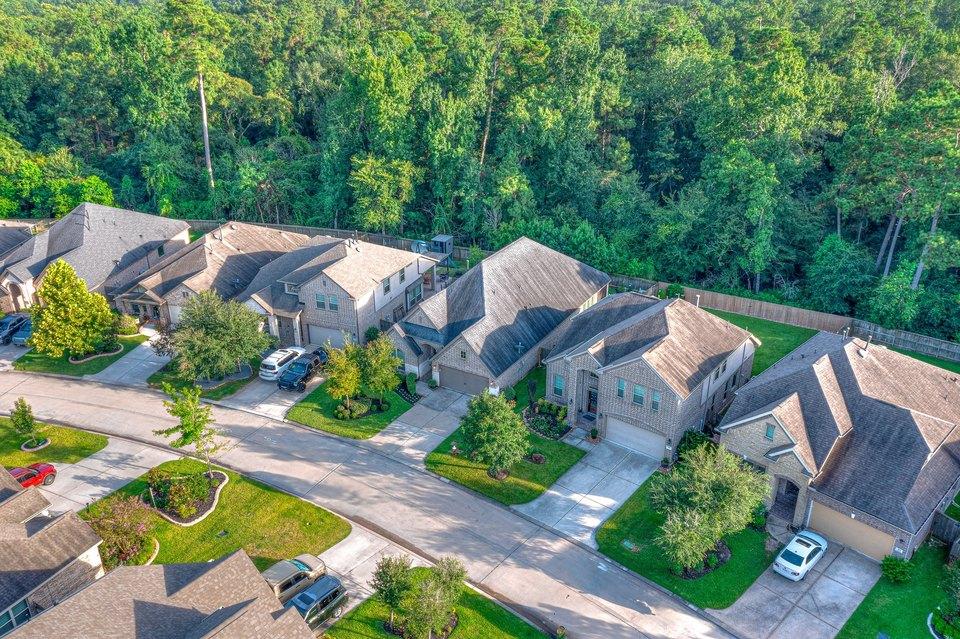
Moving to Woodforest? Don't Compare a Builder's Base Price to a Finished Resale Home
New Construction or Resale in Woodforest? Compare What You'll Actually Spend After You Get the Keys
You open two listings.
Home A
Brand-new construction.
Beautiful kitchen.
Current finishes.
Never lived in.
Advertised at:
$650,000.
Home B
Four years old.
Similar size.
Pool.
Window treatments.
Established landscaping.
Covered patio.
Advertised at:
$700,000.
At first glance:
Home A looks $50,000 cheaper.
Easy decision.
Except maybe it isn't.
Because after buying Home A, you decide you want:
Blinds.
Backyard landscaping.
Outdoor kitchen.
Pool.
Garage storage.
Ceiling fans.
Additional lighting.
And suddenly:
The $50,000 difference doesn't tell the complete story.
For someone relocating to Woodforest, comparing new construction with resale should never be limited to:
Which one has the lower list price?
The better comparison is:
What will each home realistically cost to become the home we want to live in?
Start With the Finished Price
A builder may advertise:
Base price.
Starting price.
Specific inventory-home price.
Those are not necessarily interchangeable.
Ask what the exact home you're considering costs with:
Lot.
Elevation.
Structural selections.
Design options.
Appliances.
Flooring.
Lighting.
Other selected features.
Never Build Your Budget Around “Starting From”
That number may help you understand the product line.
It does not necessarily tell you what your finished home will cost.
Inventory Homes Can Be Easier to Compare
A completed or nearly completed inventory home may already have:
Specific selections.
Known lot.
Defined price.
Estimated completion.
That can make comparison with resale more straightforward.
But Verify What Is Included
Model-home photographs may show:
Upgraded flooring.
Designer lighting.
Built-ins.
Window treatments.
Premium appliances.
Decorative walls.
Outdoor improvements.
Do not assume those features are included in the home you're purchasing.
Model Homes Sell Possibility
Your contract determines reality.
Resale Homes Are Usually Easier to Visualize as Finished Products
You can see:
Actual backyard.
Actual landscaping.
Actual window treatments.
Actual neighboring homes.
Actual view.
Actual patio.
That certainty can be valuable to someone relocating.
New Construction Gives You a Different Kind of Certainty
Depending on the home and stage of construction, you may receive:
Newer systems.
Newer materials.
Builder warranties.
Current design.
Less immediate wear.
Both options offer advantages.
They are simply different.
Landscaping Is Easy to Underestimate
A new home may include basic landscaping.
But your desired finished yard may involve:
Trees.
Shrubs.
Beds.
Irrigation changes.
Lighting.
Privacy landscaping.
Additional grass.
Hardscaping.
Mature Landscaping Takes Time
A resale home's trees and shrubs may have:
Several years of growth.
That cannot always be recreated immediately.
But Established Landscaping Also Requires Maintenance
Evaluate:
Tree condition.
Irrigation.
Drainage.
Shrubs.
Lawn.
Do not assume mature automatically means better.
Window Coverings Add Up
Relocators sometimes forget this completely.
A house full of:
Blinds.
Shades.
Shutters.
Drapery.
can represent a meaningful finished-home expense.
Resale Homes May Already Have Them
But inspect:
Condition.
Style.
Operation.
Do not assign value simply because they exist.
Pools Can Completely Change the Comparison
Imagine:
New home: $650,000.
Resale with pool: $700,000.
Buyer says:
“We'll buy new and add the pool later.”
Fine.
But first research:
Current pool cost.
Design.
Permitting.
Construction timing.
Landscaping restoration.
Fence access.
Patio changes.
Ongoing maintenance.
Do Not Assume You Can Add Any Pool to Any Lot
Consider:
Lot size.
Easements.
Setbacks.
Drainage.
Utilities.
HOA requirements.
Existing improvements.
Get appropriate professional information before purchasing based on a future pool plan.
Covered Patios Matter in Texas
A resale home may already have:
Extended patio.
Outdoor kitchen.
Fans.
Lighting.
Pool connection.
A new home may offer:
Basic covered space.
Or upgrades.
Compare the actual outdoor environment.
Outdoor Improvements Should Be Valued by Usefulness
Not simply:
Original cost.
Ask:
Would we have installed this ourselves?
If yes:
Existing improvements may be especially valuable to you.
Fencing Is Another Easy-to-Miss Expense
Look at:
Whether fencing is included.
Fence material.
Privacy.
Gates.
Condition on resale.
A Finished Backyard Can Be Worth More to a Relocator Than It Looks on Paper
Especially when you're already managing:
New job.
Moving.
School transition.
Furniture.
Utilities.
A completed outdoor space means:
One fewer project.
New Construction Can Give You More Design Control
Depending on construction stage, you may be able to choose:
Flooring.
Cabinetry.
Countertops.
Tile.
Lighting.
Structural options.
That can be appealing if you care deeply about design.
But Choices Can Become Expensive
A few upgrades at:
$2,000.
$4,000.
$7,500.
$12,000.
can quickly change the budget.
Track the total.
Create a Hard Upgrade Budget
Before visiting a design center:
Know your maximum.
Separate Structural From Cosmetic Upgrades
Structural decisions may be harder to change later.
Examples might include:
Room configuration.
Garage configuration.
Certain patio extensions.
Plumbing locations.
Cosmetic features may be easier to change after closing.
Prioritize accordingly.
Resale Lets You Evaluate Real Room Sizes
Furniture is already there.
You can see:
How a sectional fits.
Whether the dining room works.
How large the primary bedroom feels.
Builder Floor Plans Require More Visualization
Measurements help.
So do:
Model homes.
Furniture plans.
Floor-plan diagrams.
Do Not Assume the Model Represents Your Exact Floor Plan
Verify:
Room dimensions.
Ceiling heights.
Windows.
Doors.
Options.
Orientation.
Construction Timeline Matters for Relocators
If your job begins:
October 1
and the house is estimated for:
December,
you need a housing plan.
Estimated Completion Is Not the Same as Guaranteed Move-In
Weather.
Materials.
Inspections.
Labor.
Other factors
can affect construction schedules.
Build flexibility into your relocation plan.
Temporary Housing Can Change the Financial Comparison
Calculate:
Temporary rent.
Furniture rental if needed.
Storage.
Extra move.
Pet costs.
Commute.
Resale May Offer Faster Occupancy
Depending on:
Seller needs.
Contract terms.
Financing.
Closing.
This can simplify relocation.
But Resale Timing Isn't Automatically Perfect
Seller may need:
Leaseback.
Longer closing.
Specific possession date.
Negotiate timing based on actual circumstances.
Builder Incentives Can Be Valuable
You may see incentives involving:
Closing costs.
Interest-rate programs.
Design options.
Other offers.
Evaluate them carefully.
An Incentive Is Not the Same as a Price Reduction
Understand:
Conditions.
Required lender.
Required title provider if applicable.
Expiration.
Qualification.
Compare Financing Scenarios
A builder incentive may make the new home financially attractive.
A resale seller may also negotiate:
Price.
Closing contribution.
Other terms.
Compare actual numbers.
Do Not Choose Based Only on Interest Rate Advertising
Understand:
Permanent rate versus temporary buydown.
Loan costs.
APR.
Points.
Qualification.
Future payment.
Use an appropriate lender to evaluate.
Property Taxes Need Attention
Relocators should understand:
Current tax information.
Estimated future tax obligations.
Applicable exemptions.
Potential differences between land-only or partially assessed new construction records and the eventual completed-home assessment.
Do Not Budget From an Incomplete Tax Record
A new home's historical tax amount may not represent future taxes after construction.
Insurance Should Be Quoted for Both Homes
Newer construction may produce one insurance profile.
Resale another.
But premiums are property- and buyer-specific.
Get real quotes.
Home Warranties Are Different
New construction may include:
Builder warranty coverage.
Manufacturer warranties.
Specific structural coverage.
Review actual terms.
“Builder Warranty” Does Not Mean Everything Is Covered Forever
Know:
Duration.
Items covered.
Claim process.
Exclusions.
Resale Homes May Have Transferable Warranties
Potentially for:
Roof.
HVAC.
Foundation.
Windows.
Pool equipment.
Other improvements.
Verify transferability.
Inspect New Construction Too
New does not mean:
Impossible to have defects.
A buyer may choose appropriate independent inspections during applicable stages or before closing, depending on circumstances and contract rights.
Resale Inspections Tell a Different Story
They may reveal:
Normal wear.
Deferred maintenance.
Older systems.
Repairs.
Previous improvements.
Use the inspection to understand the property—not simply to create a repair list.
Newer Does Not Automatically Mean Lower Maintenance Forever
Every home requires:
HVAC service.
Landscaping.
Caulking.
Cleaning.
Drainage attention.
General maintenance.
Resale Does Not Automatically Mean Constant Repairs
A well-maintained resale home may have:
Newer roof.
Updated HVAC.
Recent water heaters.
Updated appliances.
Improved landscaping.
Review the actual property.
Location Within Woodforest Can Matter More Than Age
Do not choose:
Brand-new home in a location you like less
over:
Five-year-old home in a location you love
without thinking carefully.
You Cannot Renovate Location
You can change:
Countertops.
Paint.
Lighting.
Flooring.
You cannot move:
The lot.
Street.
View.
Community position.
Lot Orientation Deserves Attention
Consider:
Morning sun.
Afternoon sun.
Backyard shade.
Outdoor living.
Pool orientation.
Privacy.
Future Construction Can Affect Newer Sections
If neighboring lots remain undeveloped:
Ask what is planned.
Do not assume today's open view is permanent.
Resale Gives You More Information About the Surroundings
You can often already see:
Neighboring houses.
Trees.
Traffic.
Street character.
Drainage patterns visually.
Community maturity.
Compare Storage
A new home may have:
Better modern storage design.
A resale may already have:
Garage cabinetry.
Built-ins.
Attic improvements.
Closet systems.
Evaluate what you would actually use.
Appliances Can Change the Numbers
Determine what is included.
For example:
Refrigerator.
Washer.
Dryer.
Outdoor refrigerator.
Other equipment.
Do not assume.
Garage Improvements Count Too
A resale may already include:
Epoxy floor.
Storage racks.
Cabinetry.
EV charger.
Workshop.
Again:
Would you have added them?
Smart-Home Equipment Needs Careful Comparison
New construction may include:
Thermostats.
Doorbell.
Security components.
Automation.
Resale may have more extensive equipment installed by the owner.
Verify:
What conveys.
Subscriptions.
Account transfer.
Compatibility.
Do Not Pay for Technology You Will Never Use
A $10,000 automation system has little personal value if you plan to remove it.
Make a True Move-In Cost Worksheet
For each property calculate:
Purchase price.
Closing costs.
Financing costs.
Immediate repairs.
Immediate upgrades.
Window coverings.
Appliances.
Landscaping.
Fence.
Pool.
Patio.
Temporary housing.
Moving/storage.
Then compare.
The Cheapest House May Not Have the Lowest Finished Cost
That is the key.
Use the “Would We Add This Anyway?” Test
Pool?
Patio?
Blinds?
Landscaping?
If yes:
Existing improvements deserve consideration.
Use the “Can We Live With It for Five Years?” Test
Do not overfocus on:
One trendy backsplash.
Use the “Which Location Would We Choose If the Houses Were Identical?” Test
That answer is extremely useful.
Woodforest New vs. Resale Scorecard
Before deciding, compare:
Purchase Price
Actual, not advertised starting price?
Builder Upgrades
Included?
Lot Premium
Included?
Landscaping
Finished?
Window Coverings
Installed?
Fence
Included?
Pool
Existing or future cost?
Patio
Finished?
Outdoor Kitchen
Existing?
Appliances
Included?
Garage
Finished?
Smart Features
Useful?
Warranty
Understood?
Inspection
Planned?
Taxes
Future estimate understood?
Insurance
Quoted?
Timeline
Works with relocation?
Temporary Housing
Required?
Future Construction
Understood?
Location
Preferred?
Total Move-In Cost
Calculated?
Final Thoughts
New construction versus resale in Woodforest is not really a debate about:
New versus used.
It is a comparison between:
Two different paths to the lifestyle you want.
New construction may give you:
Current design.
Newer systems.
Builder warranty.
Selection opportunities.
A fresh start.
Resale may give you:
Completed landscaping.
Pool.
Patio.
Window coverings.
Established surroundings.
Immediate move-in readiness.
Neither automatically wins.
The mistake is comparing:
$650,000 new
against:
$700,000 resale
without asking what happens after closing.
If you know you'll immediately spend money adding:
Pool.
Blinds.
Landscaping.
Patio.
Storage.
then include those costs.
If you love customizing everything yourself:
That has value too.
And if you're relocating on a tight timeline:
Do not forget to price the cost and inconvenience of waiting.
The best Woodforest home is not necessarily:
The newest.
Or:
The one with the most upgrades.
It is the one that gives you the best combination of:
Location + lifestyle + total cost + timing + long-term fit.
Compare those five things carefully, and the new-construction-versus-resale decision becomes much easier.
Frequently Asked Questions
Is new construction better than resale in Woodforest?
Neither is universally better. New construction may offer newer systems, warranties, and customization, while resale homes may include established landscaping, pools, patios, window coverings, and other completed improvements.
Is a builder's advertised price the final price?
Not necessarily. Verify the price of the specific property, including lot, structural options, design selections, and other applicable costs.
Should I inspect a brand-new home?
Buyers may choose independent inspections when permitted and appropriate. New construction can still have items that deserve professional evaluation.
Are property taxes lower on new construction?
Do not assume so. Historical tax records for an unfinished or recently completed property may not reflect the future assessment of the completed home.
Is it cheaper to buy a resale home with a pool?
It can be, depending on the home's overall price and market value. If you know you want a pool, compare the resale property with the realistic current cost and feasibility of adding one to new construction.
Are builder incentives always a good deal?
They can be valuable, but evaluate the conditions, financing terms, costs, expiration dates, and overall transaction rather than focusing on the advertised incentive alone.
Which option is better if I need to move quickly?
A completed resale or inventory home may offer more predictable timing than a home still under construction, but actual possession dates should always be verified.
Should I choose location over newer construction?
Location deserves significant weight because finishes and many property features can be changed later, while the lot and surrounding location cannot.
What expenses do relocators commonly forget when buying new construction?
Commonly overlooked costs can include window coverings, landscaping enhancements, fencing, appliances, outdoor improvements, storage, and temporary housing if construction is not complete.
What's the biggest takeaway?
When comparing new construction and resale in Woodforest, compare the true finished cost of living in each home—not simply the prices shown online. Include improvements, timing, financing, taxes, insurance, and location before deciding which property offers the stronger overall fit.